
A solar power plant is, first of all, a large quantity of metal. Beneath the panels, steel structures carry the modules, trackers orient the rows towards the sun, copper cables link the panels to the inverters, and transformers step up the voltage to the grid. In Morocco, solar energy has taken a central place: the Noor complex at Ouarzazate — Noor I, Noor II and Noor III — has become a national symbol, and the NOOR Atlas programme is building four new photovoltaic plants totalling 225 MWp, with commissioning expected in mid-2027. The share of renewables in Morocco's electricity mix rose from 37% in 2021 to 46% in 2025. This guide explains which metals a solar power plant contains, how to recover them and what happens to them.
First point to understand: a solar power plant is not dismantled like a building. Panels generate current as soon as they see daylight, cables stay live until the plant is isolated, and the structures are designed to last 25 to 30 years. Recovering scrap metal from a solar power plant is therefore prepared before dismantling: inventory of the metals, electrical isolation, removal of the panels, dismantling of the structures, sorting by metal. Our article on scrap metal from wind farms in Morocco shows a similar logic: structural steel, copper cabling and electrical equipment to dismantle.
Which metals does a solar power plant contain?
A photovoltaic solar power plant contains four large families of metals. Steel first: pylons, piles, rails and torque tubes — the heaviest metal in the plant by tonnage. Aluminium next: panel frames, inverter heat sinks, cable trays. Copper: direct-current cables between the panels, alternating-current cables to the inverters, transformer windings. Stainless steel and alloys last: bolts, fixings, electrical cabinets. Alongside the metals are the glass of the modules, the silicon of the cells and the junction boxes.
The mix of metals depends on the type of plant. A tracker plant contains more moving steel — torque tubes, motors, bearings — than a fixed-structure plant. A concentrating plant such as Noor III, with its solar tower, adds heavy structures and thermal equipment. Cables are everywhere: a plant of several dozen megawatts holds kilometres of copper cables, buried or in cable trays.
Steel structures, trackers and torque tubes
The support structures are the first source of scrap from a solar power plant. Driven or screwed piles, posts, rails and torque tubes form the frame that carries the panels for 25 to 30 years. For the Noor complex, some of the steel torque tubes and pylons were manufactured in Morocco. Trackers add motors, gearboxes and bearings: welded steel assemblies in galvanised steel, designed to withstand desert wind and wide temperature swings.
At dismantling, the structures come down in the reverse order of assembly: first the panels, then the rails and tubes, finally the piles. Profiles in good condition can be reused — a sound torque tube, a straight rail — but most go to scrap: they are cut on site with a disc cutter or shears, then loaded into skips. The four new plants in the NOOR Atlas programme — Noor Ain Beni Mathar (121 MW), Enjil (42 MW), Boundnib (33 MW) and Bouanane (29 MW) — show the scale involved: hundreds of rows of panels on steel frames.
End-of-life solar panels: aluminium frames, copper and glass
A photovoltaic panel lasts 25 to 30 years: after that, its output falls and replacement — repowering — becomes worthwhile. The module is made of a large glass surface, an aluminium frame, silicon cells linked by copper ribbons, a junction box and a backsheet. The aluminium frame is the easiest metal to recover: it comes off in a few steps and goes straight into the aluminium lot. The copper in the interconnects follows the copper channel, and the glass is separated from the module in specialised facilities.
Removing panels needs care: a broken panel releases glass shards and fragile cells, and an intact panel is carried by two people, by the edges, without walking on it. Removed panels are stored flat on pallets, sheltered from the wind. Modules that still work can be reused on smaller installations; the others go to recycling channels, where aluminium, copper, glass and silicon are separated. Like the panels, the steel structures deserve a second look before remelting, as our article on scrap metal from building demolition explains.
Inverters, transformers and copper cables
Inverters convert the panels' direct current into alternating current: they are metal cabinets full of electronics, aluminium heat sinks and copper windings. Central inverters — large cabinets that concentrate the output of a block of panels — differ from string inverters, smaller and spread across the plant. Transformers then step up the voltage for injection into the grid: steel tanks, copper windings, insulating oil. Before any dismantling, this equipment must be depolluted: transformer oils, capacitors, batteries in auxiliary systems.
Cables are the plant's copper. Direct-current cables between the panels and the inverters, alternating-current cables to the transformers, earthing and control cables: they run in trenches or cable trays across the whole site. At dismantling, they are pulled out in sections, separated from the sheaths and steel cable trays, then sorted by type — bare copper, sheathed copper — before collection. Our article on scrap metal from cable manufacturers in Morocco describes cable sorting: a clean cable, without sheath or connector, recovers better than a mixed cable.
Dismantling and repowering: safety and electrical isolation
The first risk in solar dismantling is electricity. A panel exposed to light generates current, even disconnected from the grid: the plant must therefore be isolated — disconnect switches opened, cabinets locked, absence of voltage verified — before touching cables and inverters. Panels are covered or laid face down during the work. Never cut a cable without checking: a cable may be live, even on a stopped plant.
Repowering — replacing old panels with newer modules on the existing structures — is the most common case: the old modules are removed, the structures are inspected, worn parts are replaced, then the new panels are installed. Full dismantling concerns end-of-life plants: everything is removed, structures included, and the site is restored. In both cases, ownership of the scrap must be clarified in the contract before the work. For the general framework, read our article on scrap metal from sorting centres and recycling facilities.
What happens to the recovered metals?
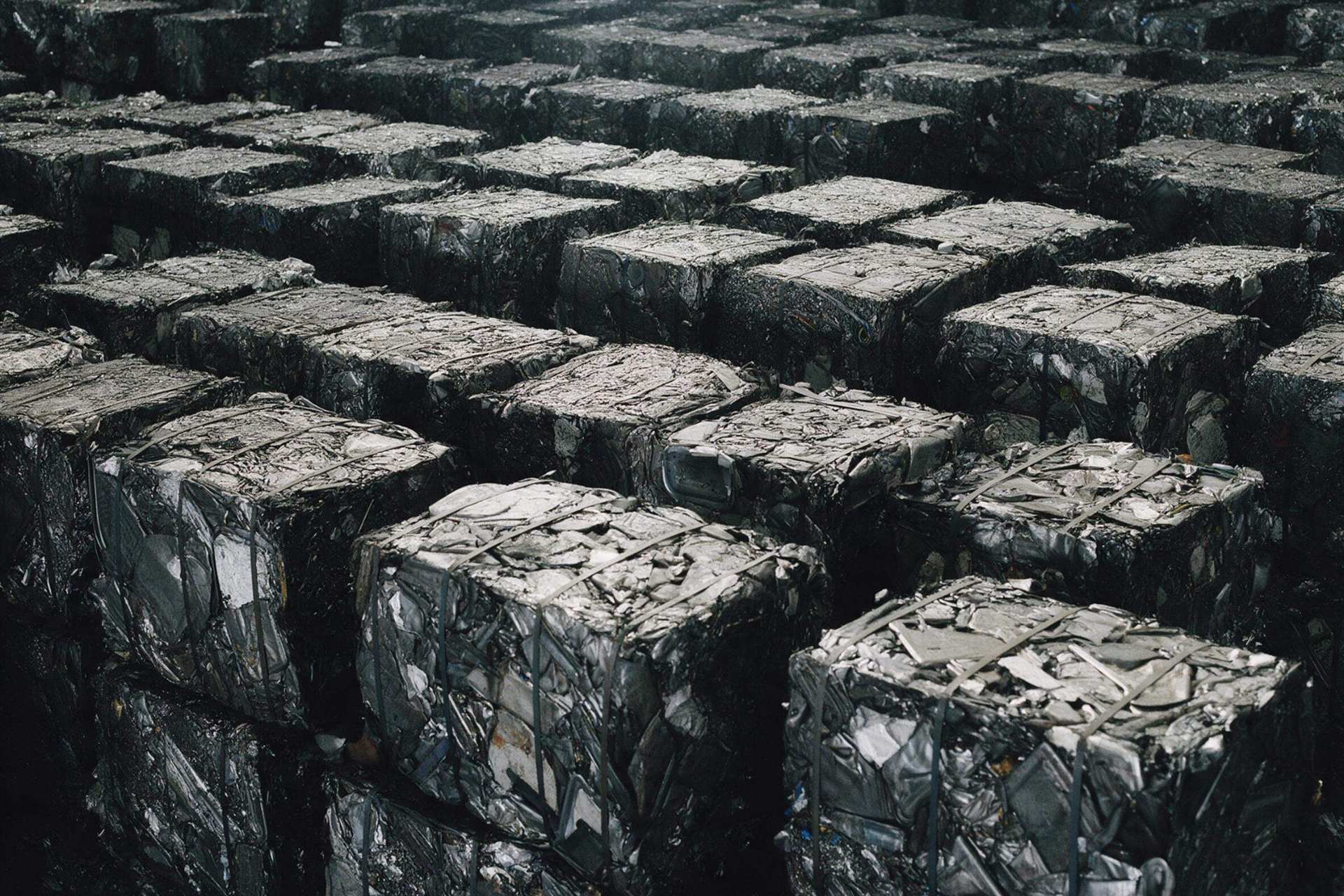
After collection, the plant's metals go to a sorting centre, where they are sheared and compacted, then to the foundry. Structural steel is remelted — most often in an electric arc furnace — into new profiles, sheets and tubes. Copper from cables and inverters becomes ingots or new cables, aluminium from frames becomes alloy ingots. Steel recycles infinitely without losing its properties, and every tonne of recycled steel avoids mining iron ore. Our article on scrap metal from thermal power plants in Morocco describes a similar path for other energy plants.
For a plant operator, recovering scrap is both revenue that reduces the cost of dismantling and a circular economy gesture: recycled metal replaces virgin ore, and the site is handed back clean. MOUMETAL works throughout Morocco on solar power plants: visit before dismantling, coordination with the operator, on-site sorting by metal, weighing and documentation of flows, collection by truck. To organise a visit, contact us: +212 660 690 806 — contact@moumetal.com. And to place solar energy in the wider energy picture, read our page scrap collection and removal and our article on metal sorting.
FAQ — Scrap metal from solar power plants
What should be done with end-of-life solar panels? Remove them with care, store them flat on pallets, then send them to a recycling channel: the aluminium frame comes off, the copper in the interconnects is recovered, the glass is separated from the module.
Which metals are found in a solar power plant? Steel for the support structures — pylons, rails, torque tubes —, aluminium for panel frames and inverter heat sinks, copper for cables and transformer windings, and stainless steel for bolts and cabinets. Steel is the largest share by tonnage, copper the largest share of the plant's metal value.
Who buys the metal structures of a solar power plant? Metal collection and recycling companies, whose trade register entry mentions scrap dealing or ferrous and non-ferrous waste processing. MOUMETAL works on solar power plants throughout Morocco, with a visit before dismantling, on-site sorting and full traceability.
How do you recover inverters and cables from a solar power plant? By first isolating the plant and depolluting the equipment — transformer oils, capacitors, batteries —, then dismantling the inverters to separate steel, aluminium and copper, and pulling the cables out in sections to sort them by type. A clean cable, without sheath or connector, recovers better than a mixed lot.
How long does a solar power plant last? 25 to 30 years for photovoltaic panels, with a gradual fall in their output. Steel structures can last longer, but repowering — replacing old modules with newer ones — often happens before the end of the structures' life. Beyond that, panels go to recycling channels and structures to scrap.
Have your solar power plant scrap recovered by MOUMETAL
Steel structures, copper cables, inverters, aluminium frames: MOUMETAL buys and collects scrap metal from solar power plants in Morocco, with a visit before dismantling, on-site sorting and full traceability. To learn more, read our page scrap metal purchase and our article on scrap metal from thermal power plants in Morocco. Contact us: +212 660 690 806 — contact@moumetal.com.