
Morocco is one of Africa's wind pioneers: Tarfaya (300 MW, 2014), Midelt, Boujdour, an 850 MW integrated wind programme, and parks commissioned as early as 2000–2001, like Koudia Al Baida. After 20 to 25 years in service, the first turbine generations are reaching end of life — and every dismantled machine releases tonnes of recoverable metal.
For a park operator, a maintenance contractor or an EPC, the question is not only technical — decommission, extend or repower — it is also economic: steel towers, copper cables, transformers, nacelles. Sorted at source, these metals earn their value instead of ending up mixed. This guide covers what a turbine is made of, the end-of-life options, and how to organise a clean decommissioning.
What happens to a wind turbine at end of life?
The average service life of a wind turbine is 20 to 25 years. At that point, the operator has three options: full decommissioning of the park with site restoration, life extension by replacing wear parts (bearings, gearbox gears), or repowering — replacing old machines with latest-generation turbines, more powerful, on sites that are already connected to the grid.
The choice depends on the condition of the machines, the wind resource, the existing grid connection and the land. As a European benchmark, France already requires 90% of mass to be reused or recycled for existing parks, and 95% for new parks authorised since 2024. Morocco has not set the same thresholds, but the direction of the industry is clear: end of life must be planned, not improvised.
Morocco and the repowering wave
The Koudia Al Baida park, commissioned in 2000–2001, is among the first concerned by repowering. Behind it, the parks of the 2000s and 2010s — Tarfaya (300 MW, 2014), Midelt (210 MW), Boujdour, and the 850 MW integrated wind programme — are in turn approaching the deadline. That is where the resource lies: not a single isolated machine, but hundreds of tonnes of steel and copper to recover per park, on sites that are already connected and accessible.
Repowering changes scrap logistics: you do not dismantle a stopped park, you replace entire machines on a site that is still operating. The schedule is phased with the erection of the new turbines, heavy cranes are shared between dismantling and assembly, and volumes concentrate over a few weeks. Hence the value of a buyer able to collect on site, section by section, without disturbing the machines that remain in service.
Which metals come off a wind turbine?
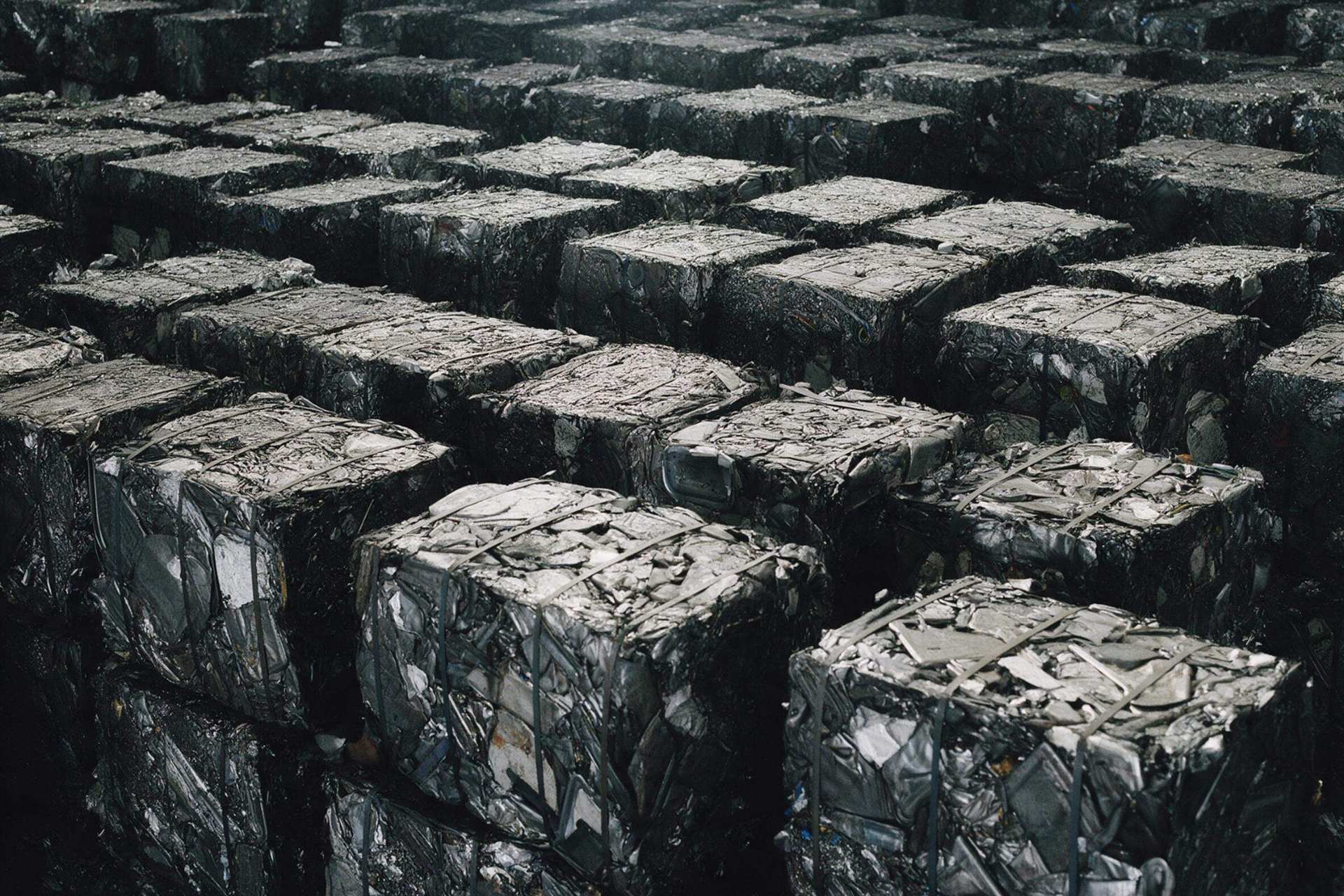
Steel dominates: towers, nacelle structures, frames. Ferrous metals make up most of a machine's mass. As a European order of magnitude, expect 100 to 130 tonnes of steel and 1 to 5 tonnes of copper per MW installed, plus iron, aluminium and cast iron. Overall, around 80% of a wind turbine's mass is recyclable today.
Copper is the second resource by value: power and connection cables, generator windings, transformers. Aluminium from components and cabinets, and cast iron from hubs and frames, complete the load. Our data center scrap guide shows how the same sorting discipline — steel structure, copper cabling, regulated flows kept apart — protects the value of a load.
Blades, on the other hand — glass or carbon composites and resin — do not join the metal load: their fibres are hard to separate from the matrix, and they belong to other streams (grinding, pyrolysis, cement kiln recovery). Mixing them with metals devalues the whole load.
Towers, nacelles, cables: sorting at source
Cutting takes place on site, in transportable sections: towers cut by torch, nacelles opened to recover the generator and gearbox, cables pulled and sorted by type. Each stream leaves separately — tower steel, cabling copper, aluminium, cast iron — because a sorted load is weighed and valued better than a mixture.
Transformers and oils are a separate stream: draining on a sealed area, oil recovery, never in the scrap bin. As with solar — see our French-language guide to end-of-life solar panel recycling — traceability makes the load valuable: machine inventory, weighing per stream, removal notes.
Organising decommissioning or repowering with a buyer
MOUMETAL adapts to the park's schedule: phased removals, machine by machine or row by row, coordination with operating teams and crane operators, removal notes per machine to keep asset-level traceability. For a full repowering, a schedule aligned with the erection of the new machines lets the old ones be cleared as work progresses, without saturating the crane pads.
The logic is the same as for any out-of-service industrial equipment: prepare the load upstream, sort at source, and remove without interrupting operations.
FAQ — Wind farm scrap metal
What is the service life of a wind turbine? 20 to 25 years on average, depending on maintenance and site conditions. Beyond that, the machine can be extended, dismantled or replaced through repowering.
What should be done with a turbine at end of life? Three options: full decommissioning with site restoration, life extension by replacing wear parts, or repowering with latest-generation machines.
Do wind turbine blades recycle? Only partially: glass or carbon composites and resin are hard to separate and belong to streams other than metals. They are kept out of the metal load so as not to devalue it.
Which metals carry the most value on a turbine? Copper (cables, windings, transformers) by value per kilo, and tower steel by volume — 100 to 130 tonnes per MW installed as an order of magnitude.
Must a turbine be dismantled before collection? Yes: cutting takes place on site, in transportable sections, using the site's cranes. Whole machines are not moved.
Have your end-of-life turbines recovered by MOUMETAL
Wind farm operators, maintenance contractors, EPCs: MOUMETAL collects and recovers your wind metals in Morocco, from tower sections to transformers, with on-site collection and traceability per machine. To go further, read our data center scrap guide and our scrap purchase page. Contact us: +212 660 690 806 — contact@moumetal.com.