

Scrap from a factory, a building site or a workshop does not end up in a landfill: it goes through a sorting centre, where it is identified, separated by metal, cut, compacted and then sent to the foundry. That sorting step is what turns a pile of mixed metal into clean raw material, ready to become steel, copper or aluminium again. In Morocco, this route is taking shape: at Kenitra, in the Atlantic Free Zone, Samta Metals & Alloys is building a 36,600 m² complex dedicated to recycling non-ferrous metals, with a capacity of 46,000 tonnes a year of aluminium and copper, planned output of 20,000 tonnes of aluminium-silicon alloy ingots and 15,000 tonnes of copper coils, commissioning in 2026 and 400 jobs. This guide explains how a scrap sorting centre works in Morocco, where to take your scrap, how to prepare it before collection and what happens to it afterwards.
A first point of method: a sorting centre is not a landfill, and a professional recycling depot is not a dump. The sorting centre receives metals that have already been collected — factory offcuts, demolition scrap, equipment out of service — and prepares them for remelting. The professional depot, by contrast, is the drop-off point: a business brings its sorted waste there, which then leaves for the right recovery routes. In both cases the rule is the same: the better sorted the metal arrives, the better it recovers. Our article on sorting metals in the business details this organisation at source.
What is a scrap metal sorting centre?
A scrap metal sorting centre is a facility that receives, identifies, sorts and conditions metals before sending them to the foundry. It takes in very different flows: factory production offcuts, demolition scrap, machines out of service, cables, batteries, warehouse racks. Each flow is weighed on arrival, visually inspected, then sent to the right sorting line. The centre does not produce new metal: it produces homogeneous loads — steel, cast iron, copper, aluminium, stainless steel, brass, zinc — of known, guaranteed composition, which is what foundries require before buying.
In Morocco, these facilities cluster around the big industrial areas — Casablanca, Kenitra, Tangier, Berrechid — where the factories that produce the offcuts and the foundries that consume them are located. Some specialise in ferrous metals, others in non-ferrous metals, and others still handle everything. For a business, knowing the nearest sorting centre is no detail: it decides how often collections happen and how good the sorting is. The scrap purchase process, step by step shows how MOUMETAL organises collection from the factory to the facility.
The sorting steps: reception, magnetic sorting, shear, baling press, shredding
The first step is reception: weighing the truck, checking the accompanying documents and visually inspecting the load. Suspect loads — mixtures, metals contaminated with oils or paints, hazardous waste mixed in with the scrap — are isolated before entering the facility. Sorting also starts at this stage: operators separate recognisable pieces by hand — copper cables, aluminium profiles, stainless steel — before any mechanical treatment.
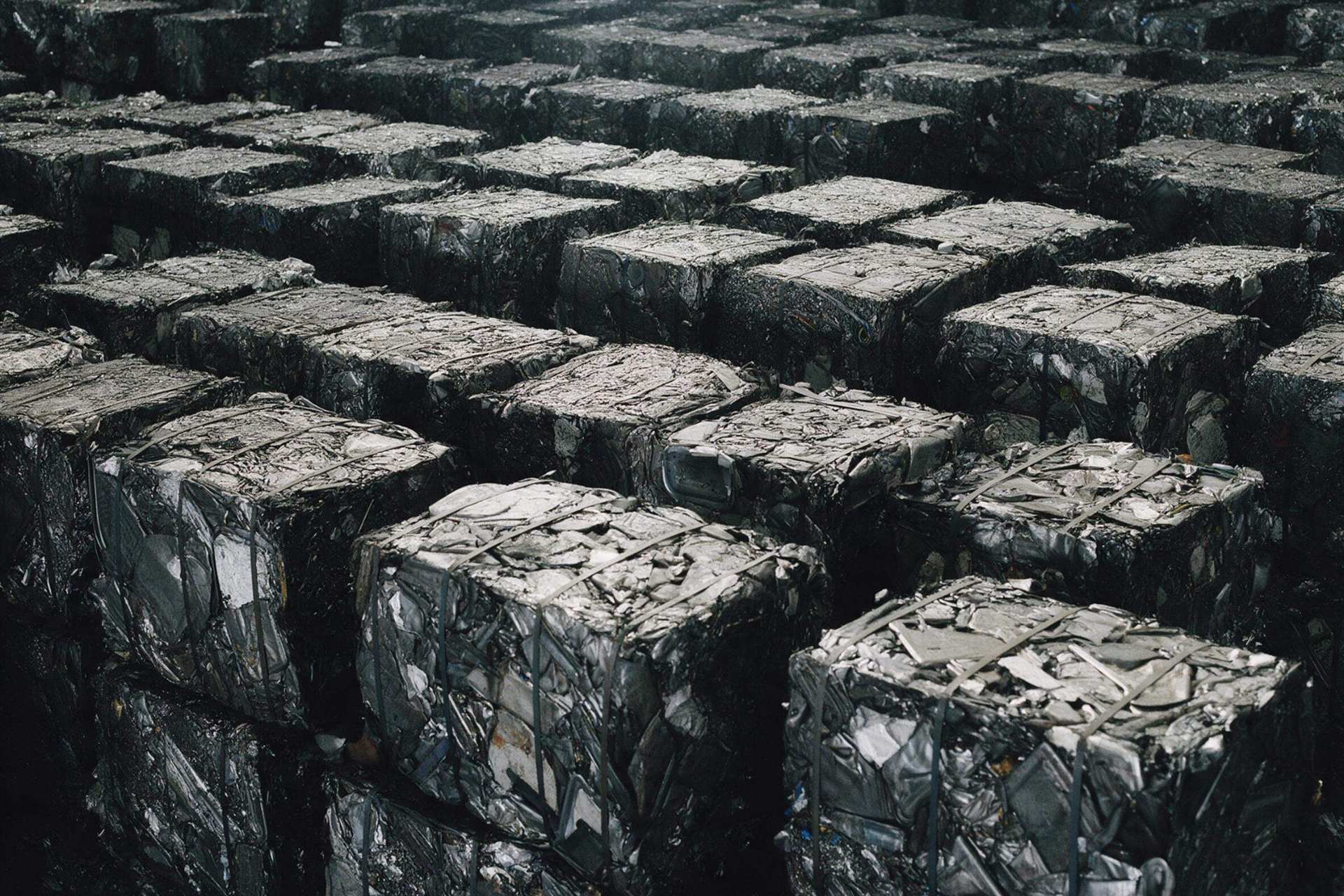
Then comes magnetic sorting: a powerful magnet, mounted on a belt or a grab, separates ferrous metals — steel, cast iron — from non-ferrous metals, which are not attracted. Bulky pieces go to the shear, which cuts them to a size suited to the foundry. The baling press compacts thin sheet, light offcuts and cables into dense bales, easy to store and transport. Finally, shredding reduces mixed loads to fragments, which density sorting tables and eddy-current separators split by density and conductivity: copper on one side, aluminium on the other, steel already removed by the magnet.
Every step has the same goal: a homogeneous load, of calibrated size, with no contamination. A well-sorted load goes straight to the foundry; a mixed load must go through sorting again, which costs time and value. That is why sorting at source, in the business that produces the scrap, matters as much as industrial sorting. For copper offcuts, read our article on buying copper in Morocco; for aluminium, the one on buying aluminium in Morocco.
The metal equipment of a sorting centre to recover
A sorting centre is itself a plant full of metal. When it modernises, moves or closes a line, its equipment becomes scrap to recover: steel bins and containers, baling presses, hydraulic shears, belt conveyors, hoppers, handling grabs, sorting belts, magnetic separators. Each of these machines weighs several tonnes of steel, with electric motors rich in copper, hydraulic cylinders and control cabinets full of cables.
Recovering this equipment follows the same logic as industrial machines: dismantling on site, separating the metals — steel from the structure, copper from the motors and cables, aluminium from the casings —, draining hydraulic oils before any cutting, then collection by truck. Presses and shears still in working order can also be resold second-hand before being recycled: reuse is always better than remelting. Our article on dismantling industrial machines in Morocco details this dismantling, and the one on recovering used electric motors covers the motors in this equipment.
Professional recycling depot or sorting centre: where to take what
The professional recycling depot is the drop-off point for businesses: limited, already sorted volumes are brought there — a bin of scrap, cables, sheet offcuts, used batteries. It suits workshops and small businesses that produce one-off loads. The sorting centre, by contrast, receives industrial volumes: whole trucks, regular collections, collection contracts. A factory that produces offcuts every week will not go to the depot: it will have its bins collected directly on site.
In both cases the same rule applies: never mix metals with hazardous waste — oils, solvents, lead batteries, WEEE — which follow separate routes, and never dump scrap in an illegal landfill: Law 28-00 on waste management forbids it, and buried metal is a lost resource. Used batteries, for example, go to their own route: our article on recycling used batteries in Morocco explains it. For metal waste from a building site, read our article on scrap from building sites.
Preparing your scrap before collection
Well-prepared scrap is collected faster and recovers better. Preparation starts with sorting at source: one bin for steel, one for aluminium, one for copper, one for stainless steel — each family labelled, from the workstation onwards. Bulky pieces are dismantled when possible: a warehouse rack comes apart into uprights and beams, a machine is separated from its motor and its electrical cabinet. Cables are coiled separately, sheets stacked flat, light offcuts put in the bin.
Then, depollution: draining oils and fluids from equipment, removing batteries, separating WEEE and hazardous items. Scrap contaminated with oil or mixed with non-metallic waste must be re-sorted on arrival, which delays collection and degrades the load. Finally, the inventory: the nature of the metals, approximate volumes, photos of the load, the site address and access — the information needed to organise the truck and the team. For a full factory clear-out, read our article on factory clear-out and recovery; for the legal framework, the one on legal duties for metal waste in Morocco.
What happens to scrap after sorting?
After sorting, scrap goes to the foundry, where it is remelted to become raw material again: sorted steel becomes billets, profiles or new sheet; remelted copper becomes ingots, coils or cables; sorted aluminium becomes alloy ingots, like those the Samta complex at Kenitra will produce. Recycled metal replaces virgin ore in production: that is the principle of the circular economy, and it is what makes sorting an industrial link in its own right, not just a cleaning step.
For this chain to work, every link must be traceable: the business handing over its scrap must know where it goes, and the foundry buying it must know its composition. That is the collector's role: inventorying, sorting, weighing, documenting each load and organising on-site collection, without interrupting the business's activity. MOUMETAL works across Morocco with this process: first contact by phone or WhatsApp, a site visit to inventory the loads, sorting with the business's teams, weighing and documenting the flows, collection by truck at agreed times. To organise a collection or an inventory, contact us: +212 660 690 806 — contact@moumetal.com. And to place sorting in the wider picture of recycling, read our scrap collection and removal page and our article on metal sorting.
FAQ — Scrap metal from sorting centres, recycling depots and recycling facilities
Where should I take my scrap in Morocco? To a professional recycling depot for small sorted loads, or directly through a collector such as MOUMETAL for industrial volumes: on-site collection, with no trip needed on your side. The big cities — Casablanca, Kenitra, Tangier, Berrechid — have sorting centres that receive metals from businesses. Never dump scrap in an illegal landfill: Law 28-00 forbids it.
How does a scrap sorting centre work? Reception and weighing of the load, visual inspection, manual sorting of recognisable pieces, then magnetic sorting to separate ferrous from non-ferrous metals, cutting with the shear, compacting with the baling press and shredding mixed loads, with final separation by density and eddy currents. Each load leaves homogeneous, calibrated and documented, ready for the foundry.
What happens to scrap after sorting? It goes to the foundry, where it is remelted into new raw material: steel, copper ingots, aluminium alloy ingots. In Morocco, the Samta complex at Kenitra, with a capacity of 46,000 tonnes a year, will produce in particular 20,000 tonnes of aluminium-silicon alloy ingots and 15,000 tonnes of copper coils. Recycled metal replaces virgin ore in production.
Who collects scrap from businesses in Morocco? Metal collectors and recyclers such as MOUMETAL, which organise inventory, on-site sorting, weighing, traceability and collection by truck, across Morocco. For small loads, professional recycling depots also receive sorted metals from businesses.
What metal equipment does a recycling facility recover? Its own equipment at end of life: steel bins and containers, baling presses, hydraulic shears, conveyors, hoppers, grabs and magnetic separators — several tonnes of steel per machine, with copper motors and hydraulic cylinders. Equipment still in good condition can also be resold second-hand before being recycled.
Have your sorting centre's scrap recovered by MOUMETAL
Bins, baling presses, shears, conveyors, production offcuts or site loads: MOUMETAL buys and collects scrap from sorting centres, professional recycling depots and recycling facilities in Morocco, with on-site sorting and full traceability. To go further, read our scrap metal purchase page and our article on buying stainless steel in Morocco, and see also our article on scrap metal from cable manufacturing. Contact us: +212 660 690 806 — contact@moumetal.com.