

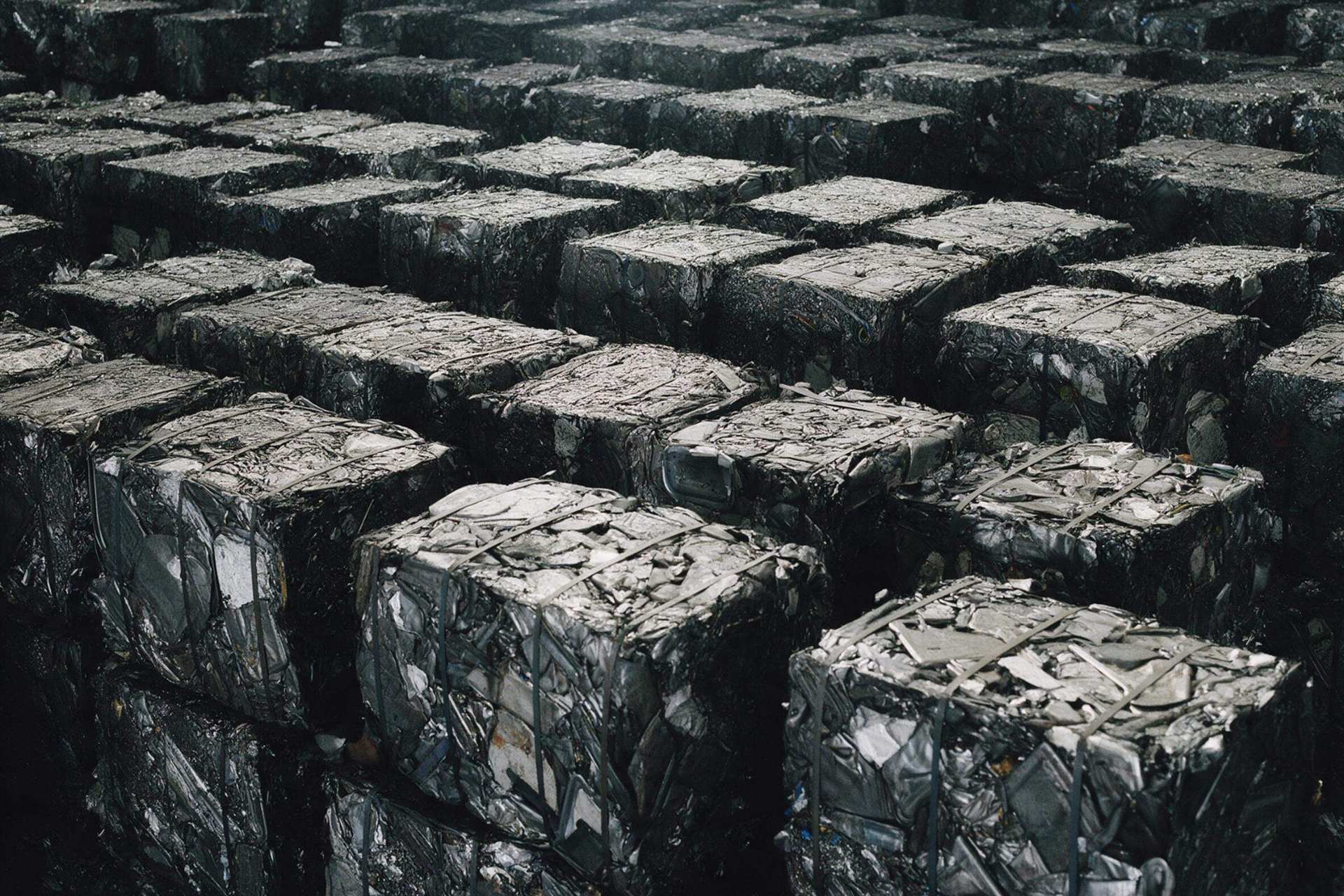
In Morocco, the metal packaging industry supplies canneries, oil mills, paint and chemical manufacturers, brewers and cosmetics producers. Food cans, drums, aerosols, caps and lids: behind every package there is a press, a cutting line, a welder and coils of metal arriving by the tonne. And at every stage of that production, offcuts come out: cutting skeletons, coil ends, defective cans, printing rejects and, from time to time, entire machines to replace.
For a packaging plant, these metals are not a secondary waste stream: they are a regular, predictable and homogeneous flow, and therefore particularly easy to recover — provided they are not mixed. Tinplate steel on one side, aluminium on the other, lacquers and inks handled without burning, food hygiene respected right down to the skip: this guide reviews the metal stocks of metal packaging, the sorting that preserves their value, and the organisation of collections for production that never stops.
The two metals of the can: tinplate steel and aluminium
The first packaging metal is tinplate steel: a steel sheet coated with a thin layer of tin, used for food cans, food drums and many lids. It is magnetic, rigid and easy to weld: it makes up most of the volume in a can plant. The second is aluminium, chosen for its lightness and corrosion resistance: beverage cans, aerosols, caps and lids. It is non-magnetic, much lighter for the same volume, and recognisable by its dull light-grey appearance.
This ferrous versus non-ferrous distinction is the most important sort in the plant, and also the simplest: a magnet is enough. Tinplate steel sticks to the magnet, aluminium does not. Yet in many workshops both end up in the same skip, and the aluminium — the most interesting metal in the load — is then downgraded to ordinary scrap level. Two labelled containers from the line exit, one for steel and one for aluminium, are enough to prevent this loss. Our guide to sorting metals in business explains the identification tests to pass on to teams.
Presses, slitters and can lines: where offcuts come from
Packaging offcuts are born at every station on the line. The slitter cuts mother coils into strips and produces edge trimmings; the press cuts ends, bodies and lids and leaves a perforated skeleton; the welder assembles can bodies and rejects failed welds; the lacquering and printing line discards badly printed or badly varnished sheets. Add line start-ups, format changes and coil changes, which produce lengths of non-conforming sheet that are still perfectly recyclable.
The machines themselves eventually produce scrap: retired presses, worn tooling, dies and punches, conveyors, curing ovens and lacquering lines removed during a modernisation. This heavy equipment is dismantled on site into transportable pieces and sorted like the rest: steel frames, motors and cabinets separately, copper cables apart. For removal projects, our article on industrial machine dismantling gives the right practices. The key point is to schedule removal outside production peaks, like any line stoppage.
Worn tooling deserves the same care: heavy steel dies and punches made from special steels keep a real metal value even when worn, provided they are not mixed with ordinary machine frames. Give them their own bin or area and flag their nature at collection, so they go to the right channel instead of disappearing into a general load.
Offcuts, skeletons and coil ends: sorting without mixing
In a packaging plant, sorting quality is decided at the workstation, not at collection time. The cutting skeleton must fall into a dedicated bin, slitter edges into another, defective cans into a third: as soon as an aluminium offcut lands in the steel bin, it is practically lost to its own channel. Labelled bins — «Tinplate steel», «Aluminium», «To be qualified» — placed at every line exit and emptied before they overflow, keep discipline without slowing operators down.
Coil ends and partly damaged coils deserve separate treatment: they are clean, homogeneous loads, easy to weigh, stored flat, sheltered from damp, on pallets or in racks. Finer machining offcuts — trimmings and cutting swarf — are grouped by metal in closed containers so they do not scatter around the workshop. As in other processing industries, a homogeneous load is loaded faster, weighed more cleanly and recovered better than a mixture. Our file on machining offcuts completes these storage rules.
Lacquers, varnishes and inks: handling printed metal without burning
A large share of packaging offcuts carries a coating: food-grade internal varnish, external lacquer, printing ink, sometimes a protective film. That is normal, and it should not worry anyone: these coatings stay on the metal and travel with it to the recycling channel, where they are removed in the remelting process. What must never be done is trying to remove them on site, and above all not by burning: burning lacquers and inks releases toxic fumes, oxidises the metal and destroys the value of the load, besides being prohibited.
The only useful precaution is to separate coated offcuts from bare offcuts when volumes justify it, and to clearly tell the collector that coatings are present, so each stream can go to the right channel. Drums and cans that held chemicals or paints are treated separately: they must be emptied, drained and identified before collection, and they never join the food-packaging circuit. If a load raises any doubt — unknown residue, strong smell, hazard label — isolate it in the «to be qualified» lot and let the collector characterise it.
Food hygiene and regular collections for continuous production
A plant making packaging for food cannot let scrap pile up anywhere: offcut storage areas must stay away from clean production areas, sheltered from dust and pests, and containers must be emptied before they overflow. Defective cans that have been in contact with foodstuffs, even empty, are not mixed with bare sheet offcuts: a dedicated bin, cleaned regularly, is enough to respect this separation. These simple rules protect both your quality audits and the recycling channel.
Finally, packaging production is continuous: a running line generates offcuts every day, and an occasional collection is not enough. The right organisation is a regular round, matched to your pace — weekly for large volumes, fortnightly for smaller workshops — with spare containers so the line never stops. MOUMETAL collects on site in Casablanca and throughout Morocco, with rounds scheduled around your line stops, and provides the collection slips that feed your traceability. For neighbouring streams, see also our article on scrap metal from agriculture and our scrap metal buying page.
FAQ — Scrap metal from metal packaging
How do you tell tinplate steel from aluminium on a line? With a magnet: tinplate steel is magnetic, aluminium is not. Weight helps too: for the same volume, aluminium is much lighter. Keep a magnet at every sorting station.
Can lacquered or printed offcuts be recycled? Yes: lacquers, varnishes and inks stay on the metal and are removed in the remelting process. Never burn them on site — it is toxic, prohibited and it downgrades the load.
What should be done with defective cans and coil ends? Group them by metal in dedicated containers, sheltered from damp. Clean coil ends are stored flat on pallets: they are homogeneous loads, easy to weigh and recover.
Must food packaging be separated from chemical packaging? Yes, absolutely: drums and cans that held chemicals are emptied, drained and identified separately. They never join the food-packaging circuit.
How often should collections be organised? On a regular round, matched to your production: weekly for large volumes, fortnightly for smaller workshops, with spare containers so the line never stops.
Have MOUMETAL recover your packaging metals
Can plants, drum, aerosol and cap manufacturers: MOUMETAL collects and recovers your tinplate steel and aluminium offcuts in Morocco, with regular rounds matched to your production and full traceability. To go further, read our guide to metal sorting and our article on scrap metal from paper and printing. Contact us: +212 660 690 806 — contact@moumetal.com.