

Every evening, urban transport buses return to the depot to refuel, be checked and washed. After fifteen to twenty years of service, they are decommissioned: withdrawn from the fleet, they head for dismantling and recycling. A bus is several tonnes of metal — steel bodywork, aluminium trims, copper cables and motors, cast iron engine block — and its end of life is a scrap job in its own right, which starts with depollution and ends with a destruction certificate. Tramways, which serve Casablanca and Rabat, follow the same logic on a larger scale: trainsets, urban rails, catenaries and maintenance workshops also produce scrap. This guide explains how long a bus lasts, how its decommissioning and dismantling work, which metals a tramway contains, and how to organise collection in an urban transport depot.
The first point of method: a decommissioned bus is not a scrapped car like any other. It weighs several tonnes, it contains fluids, batteries and electronic equipment, and dismantling it requires heavy equipment — crane, shear, press — and a team used to large vehicles. The depot itself is a source of scrap: workshop machinery, spare parts stocks, stabling structures, washing gantries. Our article on scrap metal from road transport and trucks describes truck dismantling; this one describes the world of urban transport, buses and tramways.
How long does an urban transport bus last?
An urban transport bus works intensively: several tens of thousands of kilometres a year, hundreds of stops and restarts a day, urban knocks, dirt and breakdowns. Its service life is generally between fifteen and twenty years, depending on operating intensity, maintenance and the environmental standards it must meet. Some networks decommission their buses faster than others, especially when emission standards tighten or when access for people with reduced mobility becomes mandatory.
A bus's end of life is decided by the network: when maintenance costs exceed the value of use, when parts become unavailable or when a new generation of buses arrives, the vehicle is decommissioned. It can then enjoy a second life: resale to another network, conversion into a school bus or a worksite vehicle. But when there is no longer any point in reusing it, it goes to dismantling. Heavily damaged or burnt vehicles are demolished directly, after depollution. It is the same principle as for heavy goods vehicles, with volumes and equipment adapted to the bus's size.
Decommissioning: how a bus leaves the fleet
Decommissioning a bus starts with an administrative decision: the network withdraws the vehicle from its fleet, cancels its insurance and circulation papers, and updates its fleet records. The bus is then prepared for its last journey: if it still runs, it is driven under its own power to the recycling centre; if not, it is towed or carried on a transporter. In a depot, decommissioned buses are often grouped by series, to be handled together — dismantling ten identical buses is more efficient than dismantling ten different ones.
Decommissioning is also the moment for sorting parts: everything that can be reused on other buses in the fleet is recovered before demolition — validators, upholstery, driver's seat, windscreen wipers, buttons and switches, tyres when they are not leased, bodywork parts still in good condition. This parts recovery is the bus's first recovery, before the scrap itself. When it comes to the last vehicles of a series and there is no longer any point in recovering parts, the vehicles are depolluted and then destroyed directly. For public service vehicles, read our article on scrap metal from public administrations and local authorities.
Depollution and dismantling of a decommissioned bus
Before any cutting, the bus is depolluted: draining engine oil, coolant, transmission fluid and brake fluid, recovering air-conditioning refrigerant, removing batteries, fire extinguishers and tyres. Batteries go to their own stream — our article on recycling used batteries in Morocco explains it — and fluids are collected separately. Once depolluted, the bus is considered safe and can move to the next step.
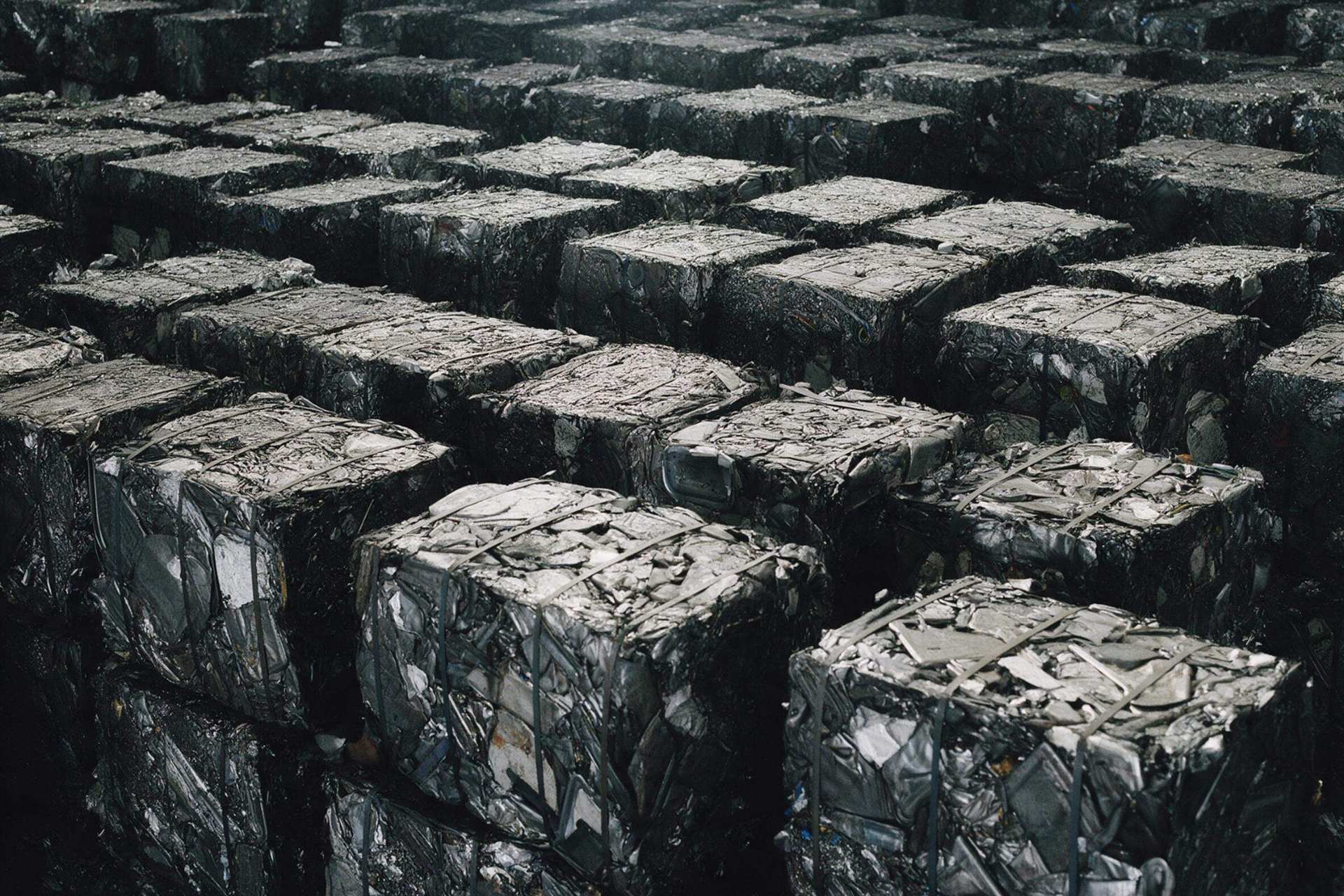
Dismantling starts with the large parts: engine, gearbox, axles and transmission are removed with suitable lifting equipment. Items containing precious metals — catalytic converters, electronic modules — are set aside for specialist recycling. Then the bodywork is cut or shredded: shells are compacted by industrial presses or shears, then shredded, and the fragments go through magnetic and density separation that recovers steel, aluminium, copper and other materials. Recycling steel saves up to three quarters of the energy needed to produce new steel from ore. At the end of the process, a destruction certificate is handed to the network: it closes the vehicle's file.
Tramways and urban rails: particular scrap
The tramways of Casablanca and Rabat add a railway dimension to urban transport: articulated trainsets, bogies, traction motors, power cables, catenaries and rails. A tramway trainset is a steel and aluminium structure, copper-rich electric motors, high-voltage cables and on-board electronic equipment. When a trainset is withdrawn from service or a line is renovated, its components become scrap to sort by metal — the same work as for heavy rail, described in our article on railway scrap in Morocco.
Urban rails are scrap apart: manganese steel profiles, heavy and long, cut with a shear or torch before transport. Track renewal works free hundreds of metres of rails, track fittings, metal sleepers and fastenings. Catenaries add copper: contact wires and catenary wires are copper or copper alloy, and are recovered in full lengths. The electrical substations of tramway lines contain transformers — our article on recovering used electrical transformers describes them — control cabinets and cables. Our article on scrap metal from road and highway infrastructure covers the road equipment that accompanies these networks.
Depot maintenance workshops: machinery and stocks
A bus or tramway depot is not just a car park: it is a complete maintenance workshop, with lifting bridges, inspection pits, machine tools, compressors, welding stations, test benches and spare parts stocks. When a depot is modernised or moves, this equipment becomes scrap: steel bridges, cast iron and steel machinery, copper electric motors, control cabinets full of cables. Our article on dismantling industrial machines in Morocco details this dismantling, and the one on recovering used electric motors covers the motors of this equipment.
Parts stocks add regular lots: filters, discs, cables, batteries, used tyres, oil drums. Sorting at source, in the depot, matters as much as industrial sorting: one bin for steel, one for aluminium, one for copper, one for stainless steel — each family labelled, as in the on-site sorting described in our article on sorting metals in the company. Workshop machining offcuts — swarf and turnings — go to their own stream, and electronic waste follows a separate stream. For legal obligations, read our article on the legal obligations for metal waste in Morocco.
What happens to a bus depot's scrap?
After dismantling and sorting, a bus depot's scrap goes to the foundry: steel from bodywork and rails becomes new profiles or sheets, aluminium from trims becomes alloy ingots, copper from cables and motors becomes new ingots or cables. Recycled metal replaces virgin ore in production: that is the circular economy principle, and it makes bus dismantling an industrial link in its own right. Our article on scrap metal from sorting centres and recycling facilities describes this passage through sorting.
For this chain to work, every link must be traceable: the network selling its buses must know where they go, and the foundry buying them must know their composition. That is the collector's role: inventorying, sorting, weighing, documenting every lot and organising on-site collection, without interrupting the depot's operations. MOUMETAL operates throughout Morocco with this process: first contact by phone or WhatsApp, site visit to inventory the lots, depollution of fluids and batteries before dismantling, sorting by metal with the depot's teams, weighing and documenting the flows, collection by truck at agreed times. To organise an inventory or a dismantling, contact us: +212 660 690 806 — contact@moumetal.com. And to place urban transport in the wider recycling picture, read our page scrap metal collection and removal and our article on metal sorting.
FAQ — Scrap metal from bus and tramway depots
What happens to a bus at the end of its life? It is decommissioned by the network, depolluted — draining fluids, removing batteries and tyres — then dismantled: parts still in good condition are recovered for reuse, and the shell is cut and then shredded. The sorted metals — steel, aluminium, copper — go to the sorting centre and then the foundry, and a destruction certificate closes the vehicle's file.
How long does an urban transport bus last? Generally between fifteen and twenty years, depending on operating intensity, maintenance and environmental standards. A bus drives several tens of thousands of kilometres a year and multiplies stops and restarts: wear and maintenance costs decide its decommissioning.
How is a bus dismantled? Depollution first — oils, coolants, air-conditioning refrigerant, batteries — then removal of the large parts (engine, gearbox, axles), setting aside reusable parts and items with precious metals, and finally cutting or shredding the shell, with magnetic and density separation of the metals.
Which metals does a tramway contain? Steel for the structure, bogies and rails, aluminium for trims and bodies, copper for traction motors, power cables and catenaries, and on-board electronic equipment. Electrical substations add transformers and control cabinets.
Who buys decommissioned buses in Morocco? Metal collectors and recyclers like MOUMETAL, which organise inventory, depollution, dismantling, on-site sorting, weighing and collection by truck, throughout Morocco, without interrupting the depot's operations. Buses that still run can also be resold second-hand to other networks before being dismantled.
Have your depot's scrap recovered by MOUMETAL
Decommissioned buses, tramway trainsets, urban rails, catenaries or workshop machinery: MOUMETAL buys and collects scrap from bus and tramway depots in Morocco, with depollution, on-site sorting and full traceability. To learn more, read our page scrap metal purchase and our article on railway scrap in Morocco. Contact us: +212 660 690 806 — contact@moumetal.com.