

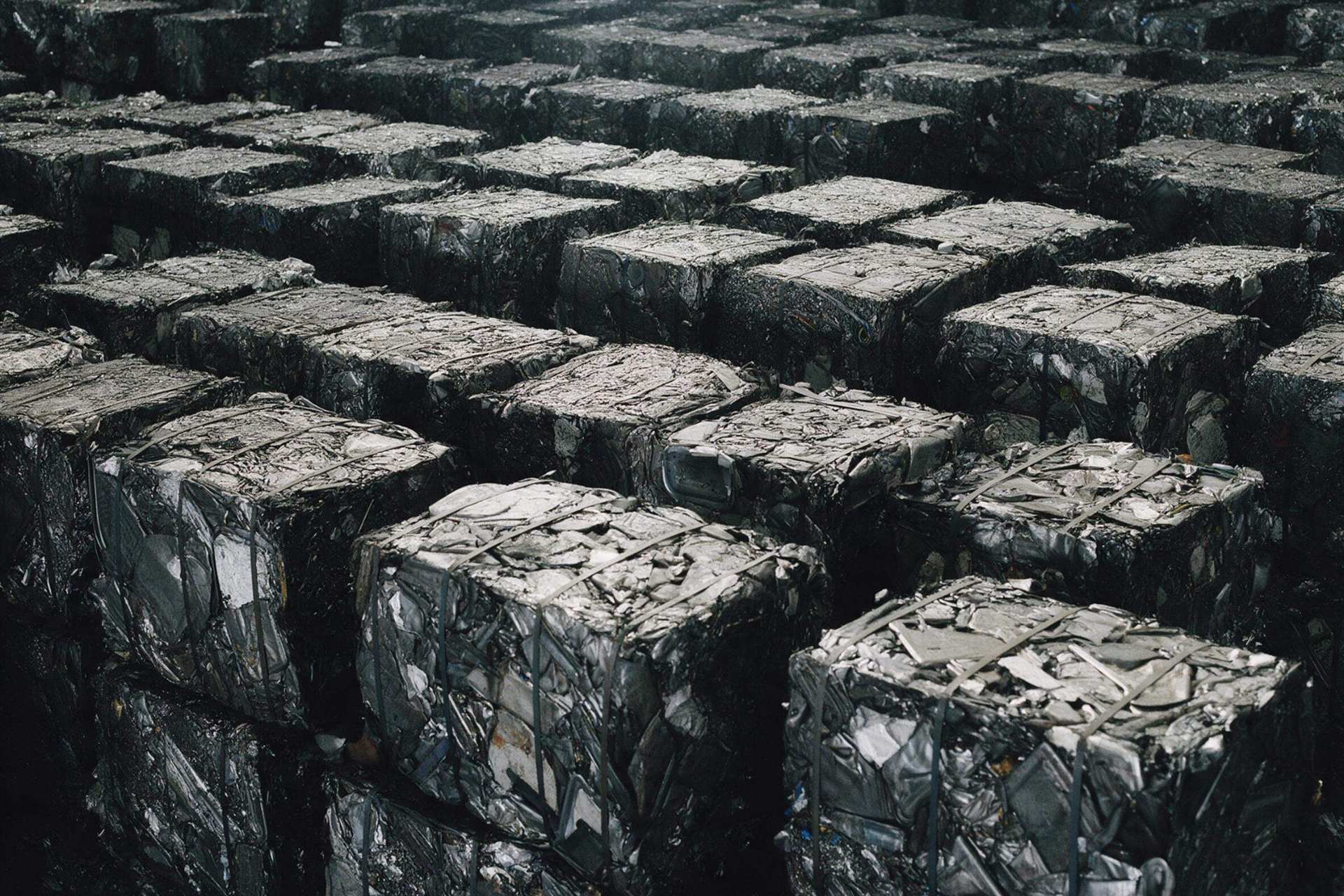
Every year, Morocco's road network changes: motorway sections are modernised, interchanges are reconfigured, safety equipment reaches the end of its service life, and public-works machines are retired. Behind these works, often barely noticed by road users, lies a considerable metal resource: safety guardrails, sign gantries and signposts, lighting columns, bridge steelwork, toll and service-area structures, and the machines that built the road itself.
For infrastructure managers, concessionaires, public-works contractors and local authorities, the challenge is twofold. First comes safety: removing road equipment without exposing teams or disrupting traffic demands rigorous preparation. Then comes material recovery: galvanised steel, aluminium sign panels and a machine chassis are not treated in the same way, and sorting carried out at the moment of removal shapes everything that follows. This guide explains, in practical terms, how to approach scrap metal from road infrastructure in Morocco, from guardrails to end-of-life machinery, without confusing a road worksite with a building site.
What road infrastructure covers
Road infrastructure means all the structures and equipment that allow a road or motorway to operate safely, day and night. It includes restraint systems such as steel guardrails, gantries and cantilevers carrying directional signs, lighting masts and columns, bridge and footbridge parapets, steel structures at toll plazas and service areas, and crossing structures such as composite decks and pedestrian footbridges. Alongside these fixed assets are public-works machines and site equipment: graders, compactors, pavers, lorries, tipping bodies, steel formwork and heavy tools, whose end of life generates large volumes of metal.
On Morocco's major routes, from the Casablanca-Rabat corridor to the corridors towards Tangier or Marrakech, this equipment faces particular stresses: heavy traffic, coastal salt air, wide temperature swings inland, repeated impacts and maintenance programmed by section. That is why managing road scrap begins well before the first cut, with a precise inventory of the items to remove, their metal type and their condition.
Guardrails, gantries and signs: galvanised steel to sort with care
Guardrails are often the first stream encountered on a road worksite. They are mostly galvanised steel: a zinc coating protects the steel against corrosion, which is excellent for the service life of the equipment, but requires the steel to be sorted separately from other steels at recovery stage. Sorting at removal, by family and by condition, avoids many later rework steps.
Gantries, cantilevers and sign panels add further variety. Their supporting structures are often steel, while the panels themselves combine aluminium, retroreflective film and assorted fixings. Lighting columns may be steel or aluminium depending on their generation, and their brackets, access doors and base plates must be separated from cables and electrical fittings. This identification work follows the same principles as sorting metals in a business, applied here to a road setting where access and available time are constrained.
Bridges and steel structures: separating steel from concrete without weakening the structure
Bridges, footbridges and crossing structures contain sometimes massive steelwork: beams, bracing, parapets, bearings, expansion joints and composite deck elements. Their removal is never a simple demolition. Each element may contribute, even temporarily, to the stability of the whole, and its removal must follow an order set out in the technical studies for the works. Removal therefore follows an approved sequence, in coordination with the project owner.
Separating materials is the other major requirement. On a composite structure, steel is often bonded to concrete, asphalt surfacing or protective coatings, and the materials must be cleanly parted to obtain usable batches. Copper or aluminium found in electrical equipment associated with the structure, such as cable trays or cabinets, deserves the same care as in well-organised copper recovery in Morocco: separated at source, it keeps its full material value instead of being lost inside an undifferentiated ferrous batch.
Working beside live traffic: delimited zones, night windows and coordination
The strongest feature of a road worksite is that it takes place beside, sometimes only a few metres from, traffic that keeps flowing. Safety therefore starts with temporary traffic management in line with the rules in force: delineation, cones, advance warning signs, protection vehicles and, where needed, closure of a single lane. Areas for removing and storing scrap must be clearly delimited, away from the path of road users, and movements of lorries and handling machines must be planned so they never cross traffic dangerously.
Night windows play a central role. At night traffic is lighter, which makes it possible to remove a gantry, replace a guardrail section or take down a lighting column more safely and with less disruption for users. Planning must therefore balance the urgency of removal, lane availability and working conditions, bringing together from the outset the road manager, the works contractor and the scrap collection provider. Without that coordination, a worksite well prepared on paper can quickly become complicated on the ground.
Dismantling without closing the road: method, phasing and clearance
Dismantling without closing the road is possible, provided work is phased in short sections and no more front is opened than teams can secure and close again. A guardrail section is removed segment by segment, a gantry is taken down once its supports are made safe, and a lighting column is removed once its networks are disconnected and its foundation dealt with. Each phase ends with the area returned to a provisional or final safe state: a clean carriageway, no scrap left on the ground, and temporary signing folded away or maintained as appropriate. This discipline avoids dangerous intermediate situations in which equipment would be half removed when the road reopens to traffic.
Clearance follows the same phased logic. Removed metals must not pile up beside the carriageway: they are gathered on dedicated storage areas, away from traffic, then loaded onto suitable vehicles, carefully secured so nothing can fall in transit. This organisation resembles a well-run building construction site, with one extra constraint: every lorry interacts with traffic.
Reuse, scrap and end-of-life public-works machinery
Not every metal item removed from a road automatically becomes scrap. Some parts, still compliant and in good condition, can be reused: a straight guardrail beam, an undeformed post, a still-legible sign element or an intact parapet may find a second life on another section, after inspection and, where needed, refurbishment. Reuse is especially relevant for standardised equipment whose dimensions and fixings are known and interchangeable.
Conversely, a part deformed by impact, cracked, deeply corroded or no longer compliant with current standards must leave the reuse circuit and join the material recovery stream. Trying to reuse a weakened element at all costs would put road users at risk and expose those involved to liability. The decision must therefore be taken at removal, by people able to judge the real condition of the part, not after prolonged storage in which batches become mixed. Public-works machines follow the same logic: a chassis or engine still in working order may be recovered other than as scrap, as shown by the recovery of used electric motors, while a machine at end of life, drained and depolluted, becomes a source of sorted metals.
Roads produce not only scrap from fixed equipment, but also scrap from the machines that build and maintain them. Graders, loaders, excavators, compactors, pavers, tipper lorries and generator sets eventually reach a point where further repair makes no operational sense. Their treatment first requires rigorous depollution: draining oils and fuels, removing batteries, filters and fluids, taking off tyres and non-metallic parts.
Once depolluted, the machine is dismantled by assembly — steel chassis, hydraulic parts, engines, copper wiring and aluminium components — each directed according to its type. To see how MOUMETAL organises this kind of collection, the scrap metal purchase page sets out the general framework of its work with professionals.
FAQ — Road infrastructure scrap metal in Morocco
Can guardrails or a gantry be removed without closing the road? Yes, in many cases, provided work proceeds section by section, with suitable temporary signing, delimited zones and often night windows. Feasibility depends on traffic, the layout of the site and the requirements of the road manager.
Why must galvanised guardrail steel be sorted separately? Because its zinc coating sets it apart from other steels. Sorting it separately at removal preserves batch quality, eases its routing to the right stream and avoids mixtures that complicate recovery.
What happens to the metals from a bridge or footbridge that is taken down? After phased removal approved on technical grounds, metal elements are separated from concrete and other materials, cut to transportable sizes, then sorted by type for reuse where they remain compliant, or for material recovery otherwise.
How is an end-of-life public-works machine collected? The machine is first depolluted, with fluids drained and batteries and tyres removed, then dismantled into sorted metal assemblies. Collection is planned with the firm to limit the time space remains occupied and the interaction with traffic.
Who coordinates removal works on a road that stays open? The road manager, the works contractor and the metals provider coordinate the phasing, temporary signing, intervention windows and clearance together, so that the safety of users and teams remains the priority at every stage.
Entrust your road infrastructure scrap to MOUMETAL
MOUMETAL supports infrastructure managers, concessionaires, public-works contractors and local authorities with the removal, sorting and recovery of metals from Moroccan roads and motorways, from guardrails and gantries to end-of-life machinery. To organise an intervention, a site visit or a collection coordinated with your works, contact MOUMETAL on +212 660 690 806 or by email at contact@moumetal.com.