
In just a few years, Tangier has become one of Morocco's leading industrial hubs — and one of the cities where industrial scrap is most abundant. At the north of the country, at the entrance to the Strait of Gibraltar, the city combines every advantage: Tanger Med, Morocco's largest port and a major logistics platform between Europe and Africa, the Tangier Free Zone, home to automotive, aeronautics and electronics plants, and industrial areas such as Gzenaya that concentrate hundreds of companies. Every day, these factories, sites and platforms produce production offcuts, cables, sheets, profiles and end-of-life equipment. For a free zone plant, a Gzenaya workshop or a port company, organising the sale of this scrap well means freeing up space, securing waste flows and recovering value from materials that would otherwise pile up. This guide explains why Tangier produces so much industrial scrap, which metals its industries generate, how collection is organised in the free zone and at Tanger Med, and how MOUMETAL collects scrap in Tangier.
First point to understand: Tangier's scrap is not the scrap of an isolated craftsman — it is first and foremost industrial scrap, regular and bulky. A car plant cuts steel sheets every day, a wiring plant produces copper offcuts with every batch, an aeronautics plant generates high-quality aluminium offcuts. These flows do not look like those of a one-off demolition site: they are recurring, sorted at source and tracked with weighing slips. Our page scrap metal in Tangier presents our service on site; this article details Tangier's industrial landscape and how each type of scrap is recovered there.
Why Tangier produces so much industrial scrap
Tangier concentrates three scrap-producing engines. The first is the port of Tanger Med, Morocco's largest port, which has made the region a leading logistics platform: container terminals, logistics zones, warehouses, port maintenance workshops and shipyards. Everything that transits, is stored and is repaired in a port generates metal: reformed containers, warehouse structures, spare parts, cables and out-of-service equipment. The second engine is the Tangier Free Zone, which hosts automotive, aeronautics and electronics plants. These factories work metal continuously: cutting, stamping, machining, assembly, wiring. The third engine is the city's own industrial zones, notably Gzenaya and the Al Hoceima road area, where factories of all sizes, mechanical workshops and depots are concentrated.
This concentration changes the nature of collection work. In Tangier, a collector does not only pick up occasional lots: they organise regular rounds, dedicated skips per metal and collections scheduled with production managers. Volumes are regular, metals are known in advance and traceability is required: large plants ask for weighing slips, waste transfer notes and treatment certificates. Public tenders also regularly sell scrap lots in the Tangier region: lots of iron, copper and aluminium from public administrations and institutions are sold by tender, which confirms that the region is an active scrap market. To understand the procedure for these public sales, read our article on scrap metal from public administrations and local authorities.
The metals produced by Tangier's industries
Steel first: it is Tangier's most bulky metal. Car plants cut steel sheets for bodywork and structures, mechanical workshops produce machining swarf and offcuts, construction sites deliver profiles, reinforcement bars and sheets. Steel comes in several forms — cutting offcuts, sheets, profiles, machined parts, heavy scrap — and is sorted by shape and quality before collection. Our article on automotive scrap in Morocco details the offcuts from car plants and workshops.
Aluminium next: it is the signature metal of Tangier's aeronautics and electronics. Aeronautics plants in the free zone machine aluminium parts, aluminium joinery workshops produce profile offcuts, cables and electronic equipment contain aluminium. Aluminium is sorted by alloy and by shape, because a clean lot recovers better than a mixed lot. Copper comes from electrical cables, motors, transformers and electronic equipment: Tangier's wiring plants produce it with every batch, and renovation sites release it regularly. Stainless steel is also found in food and pharmaceutical equipment, brass in taps and fittings, and zinc in sheets and roofing. Our article on aeronautics and airport scrap details the metals of this demanding sector, and our article on sorting metals in a company the method for separating them at source.
Free zone and Tanger Med: how factory scrap is collected
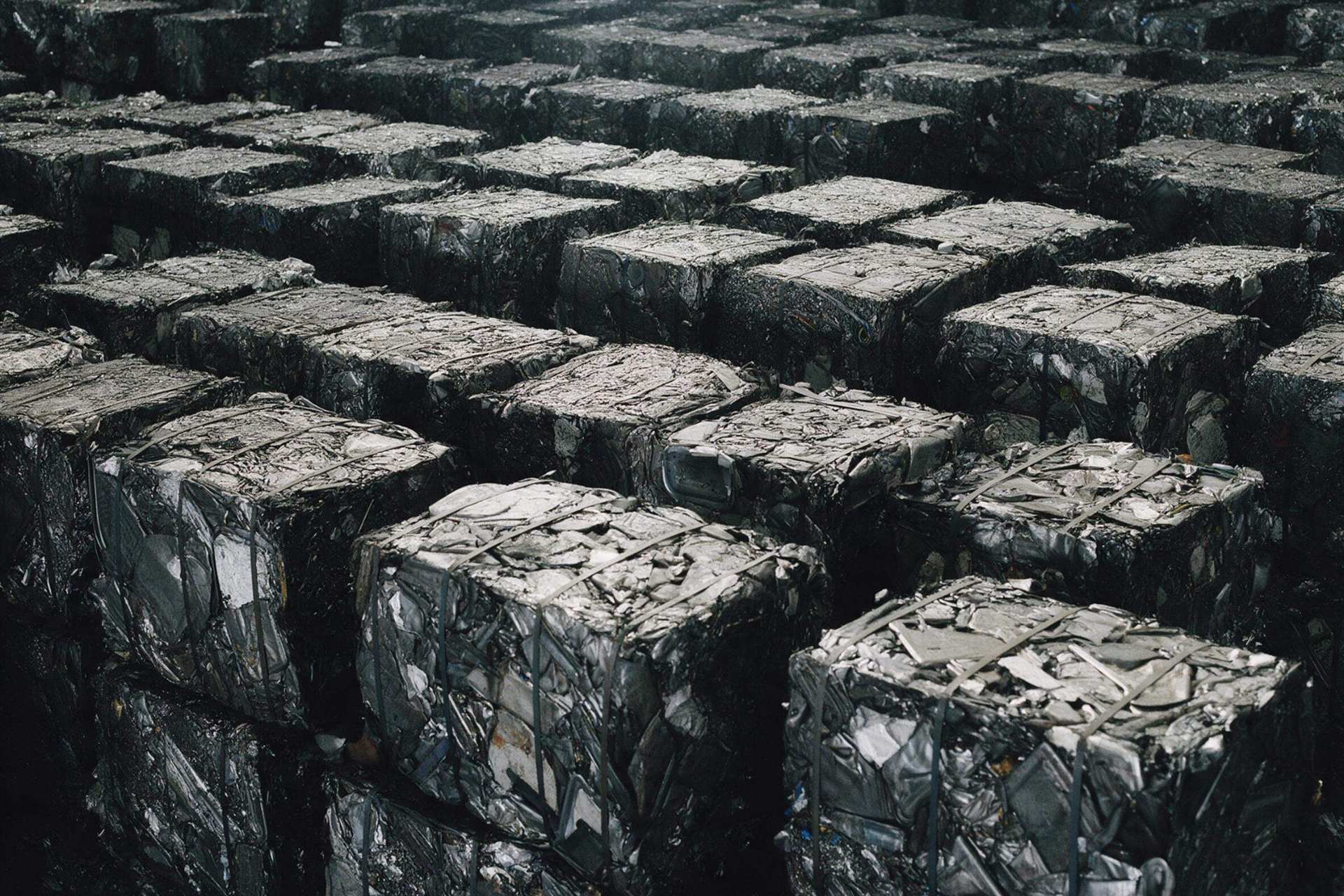
In the Tangier Free Zone, scrap collection follows the pace of production. Plants generate offcuts continuously: steel sheet offcuts from cutting, aluminium offcuts from machining, copper cable offcuts from wiring, metal packaging and production rejects. The typical organisation is as follows: dedicated skips or containers are placed at the workshop exits, one per metal family, and emptied at regular intervals according to the volume produced. Sorting at source is essential: a clean steel skip, a clean aluminium skip and a clean copper skip each recover better than a mixture. Some plants have presses or compactors on site; others leave compacting to the sorting centre. In all cases, regular collections prevent workshops from becoming cluttered and storage areas from filling up.
At Tanger Med, scrap comes from port and logistics operations: maintenance of handling equipment, container repair, replacement of warehouse steel structures, cables and electrical equipment in the terminals. An industrial recycling unit is installed in the free zone: Elec'Recyclage operates a seven-thousand-square-metre unit dedicated to collecting, sorting and compacting industrial waste, including ferrous and non-ferrous metals. This presence confirms that Tangier has a local treatment chain, and that the region's factory scrap does not need to travel across the country to be sorted and recovered. Companies at Tanger Med that sell their scrap generally do so under a regular collection contract, with scheduled collections, documented weighing and full traceability of lots. For the general framework of these contracts, read our article on scrap metal buyback step by step.
Port, shipyards and logistics: a scrap apart
Port and shipyard scrap deserves a chapter of its own, because it does not look like factory scrap. In a port you find mooring chains, steel cables, reformed containers, crane and handling equipment parts, ship plates and out-of-service handling equipment. Shipyards and repair workshops produce cut plates, profiles, pipework and cables, often in thick steel and large sizes, which need cutting on site before transport. Marine corrosion is common on these metals, but it does not prevent remelting: oxidised steel remains recoverable steel, just like the rusty reinforcing steel from demolitions.
Logistics, for its part, produces more discreet but regular scrap: dismantled warehouse racking, out-of-service forklifts and pallet trucks, quay steel structures, replaced cables and electrical equipment. The logistics platforms of Tanger Med renew their equipment in waves, and each renewal frees a lot of metal to be removed quickly to clear the quays. Our article on scrap from ports and shipyards details these materials and their handling, and our article on construction site scrap the metals from the sites that accompany the expansion of the port and the city.
Construction and renovation sites in the city
Outside the industrial zones, Tangier is a city under permanent construction: new neighbourhoods, residences, hotels, shopping centres and infrastructure, not to mention the renovation of old buildings in the city centre and the medina. Each site produces its scrap: reinforcing steel from slabs and columns, steel profiles and frames, aluminium joinery, sheets and roofing, copper electrical cables, pipework and boilers. Renovation sites also release end-of-life equipment — lifts, air-conditioning units, pumps — which contain steel, copper and aluminium.
On an urban site, the main constraint is space: sorting has to happen on a small footprint, collections must be regular so as not to block access, and removals must be coordinated with the site schedule. A lot sorted by metal — steel on one side, aluminium on the other, copper apart — is collected faster and recovers better than a mixed pile. Demolitions of old buildings, frequent in neighbourhoods under renovation, produce the same metal families as new sites, plus joinery and equipment to be removed before demolition. Our article on scrap metal from building demolition describes the selective deconstruction that maximises this recovery.
How collection works with MOUMETAL
Scrap collection in Tangier with MOUMETAL follows a simple six-step process. First step: contact. You describe your lot to us — type of metal, approximate quantity, location, free zone, Tanger Med, Gzenaya or a site in the city — by phone or WhatsApp. Second step: the visit. We come on site to see the metals, estimate volumes and check access for the trucks. Third step: sorting. On site, we separate the metals by family — steel, aluminium, copper, stainless steel, brass, zinc — and prepare the lots for transport. Fourth step: weighing and documentation. Each lot is weighed and documented: nature of the metals, weight, origin, transfer note. Companies that need it receive full traceability of their flows, useful for their audits and environmental reports.
Fifth step: collection. Our trucks come at agreed times — including outside production hours so as not to disturb the workshops — and remove the lots by truck, skip by skip. Sixth step: follow-up. For plants that produce scrap continuously, we set up regular collection: dedicated skips per metal, planned rounds, collections at fixed intervals. To organise a visit or regular collection in Tangier, contact us: +212 660 690 806 — contact@moumetal.com. And to place Tangier in our national coverage, read our page scrap collection and removal and our article on sorting metals in a company.
FAQ — Scrap metal in Tangier
Where can I sell my scrap metal in Tangier? Through a metal collection and recycling company that works on site, such as MOUMETAL: contact them, describe your lot, and organise a visit for the inventory, sorting and collection. Free zone and Gzenaya plants generally sell through regular collection, sites and individuals through one-off collection.
Who buys scrap from the Tangier Free Zone plants? Metal collection and recycling companies that work with industry: they place dedicated skips per metal at the workshop exits, organise regular collections and provide weighing slips, transfer notes and traceability. MOUMETAL works in the Tangier Free Zone and at Tanger Med, with on-site visits, sorting by metal and full documentation of lots.
How does scrap collection work in Tangier? After an initial contact and an on-site visit, the metals are sorted by family, weighed and documented, then collected by truck at agreed times — including outside production hours so as not to disturb the workshops. For plants that produce continuously, collection becomes regular, with dedicated skips and planned rounds.
Which metals are bought in Tangier? Steel — cutting offcuts, sheets, profiles, machined parts —, aluminium from aeronautics plants and joinery, copper from cables and motors, stainless steel from equipment, brass from taps and fittings, and zinc from sheets and roofing. Each metal is sorted separately: a clean lot recovers better than a mixed lot.
Do Tanger Med companies sell their scrap? Yes: Tanger Med and free zone companies sell their scrap under regular collection contracts — port maintenance, container repair, factory production offcuts — with scheduled collections, documented weighing and full traceability of lots.
Have your scrap in Tangier recovered by MOUMETAL
Free zone, Tanger Med, Gzenaya, port or site in the city: MOUMETAL buys and collects scrap metal in Tangier, with on-site visits, sorting by metal, weighing, traceability and collection by truck. To learn more, read our page scrap metal in Tangier and our article on automotive scrap in Morocco. Contact us: +212 660 690 806 — contact@moumetal.com.