

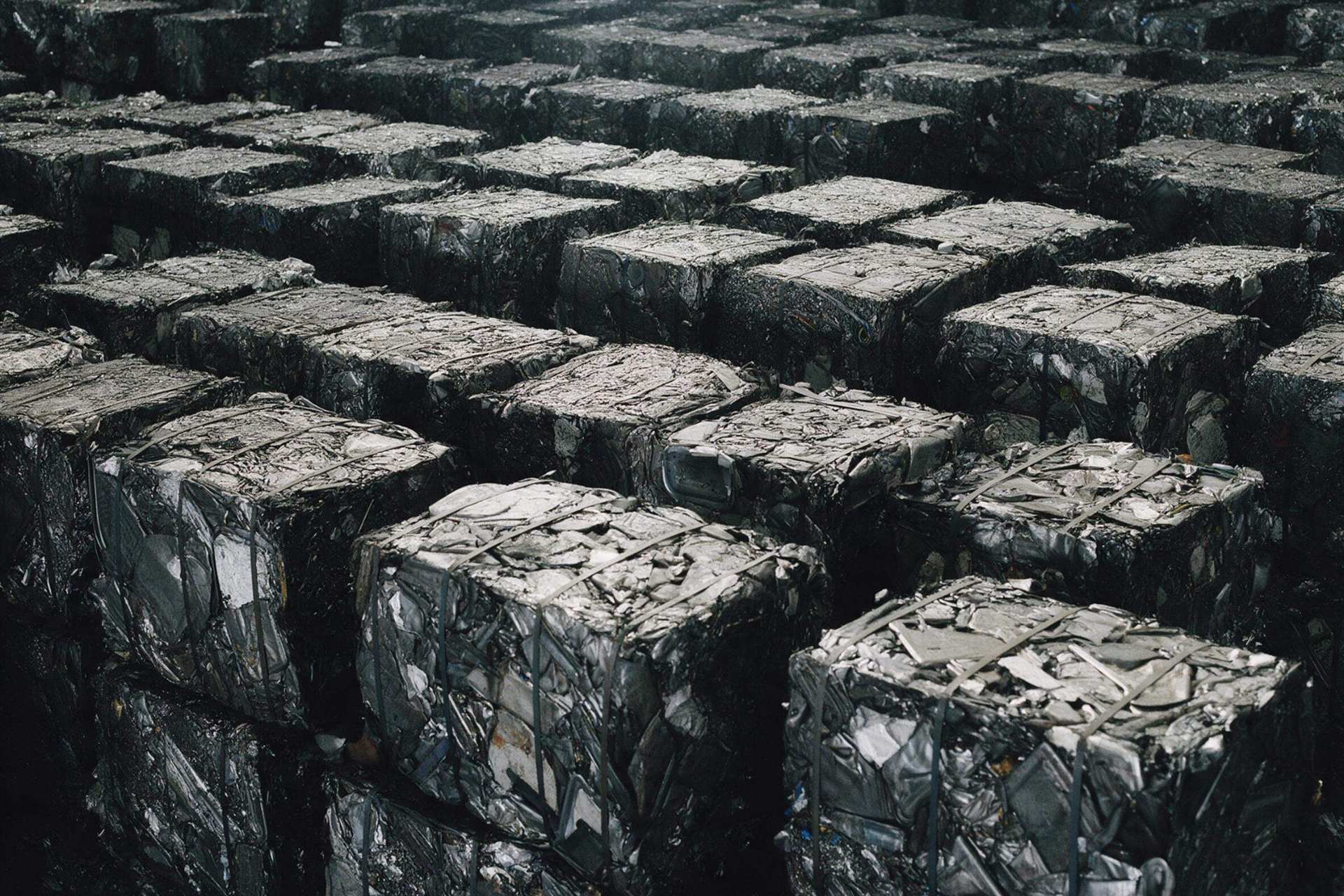
A stadium is a cathedral of steel: roof frameworks, stands, grandstand structures, floodlight masts, fencing, gates, technical equipment. In Morocco, sports infrastructure is going through an unprecedented cycle of renovation and construction, with venues modernised, enlarged or rebuilt across the country. Every renovation job releases tonnes of metal — and every tonne sorted at source becomes a raw material again, instead of ending as indiscriminate demolition waste.
The specific feature of stadiums is the diversity of the metals involved and the pressure of the calendar: work often concentrates between two seasons, on tight deadlines, on sites that must reopen on a fixed date. Organising metal sorting and collection at that pace is at once a space saving, a time saving and a resource. This guide details a stadium's stocks, dismantling approaches — including modular ones — and how MOUMETAL works on these jobs.
Frameworks, roofs and stands: a stadium's steel stock
A stadium's first stock is its structure: steel roof frameworks, beams and grandstand trusses, stand frameworks, stairs and walkways. These elements are structural steel, sometimes galvanised, and represent most of the tonnage in a renovation or demolition. Cutting them into sections, then sorting them by grade and condition, sends them directly to steel recycling.
Stands deserve special attention: depending on the venue, they combine steel structures, metal or plastic seats, guard rails and fixings. Separation from the moment of dismantling — metal on one side, other materials on the other — avoids the mixture that would downgrade the whole lot. Roofing and cladding sheets, often removed over large areas, get the same treatment: our guide on recovering industrial sheets and roofs applies directly to stadium roofs. Sports renovation jobs share their methods with construction: our article on construction-site scrap metal details on-site sorting organisation.
Modular stadiums: dismantling and reuse
The modular stadium concept — demountable stands, mounted on bolted tubular structures, that can be taken down after the event and rebuilt elsewhere — was highlighted in Morocco's bid dossiers. Its value for recovery is twofold: elements taken down cleanly can be reused as they are on another site, and those that cannot are already sorted by nature, ready for recycling.
For a club or a local authority, the rule is simple: dismantle, do not demolish. A stand taken apart element by element keeps its reuse value; the same stand flattened by a bulldozer is worth only its weight in mixed scrap. Even when reuse is not possible, selective dismantling preserves metal value: steel structures, aluminium light elements, fixings and bolts sorted separately. It is the approach MOUMETAL also applies to industrial dismantling: inventory first, cut second.
Lighting, sound, fencing: the stadium's other metals
Beyond structures, a stadium concentrates valuable metals in its technical equipment. Floodlight masts and pylons are steel, sometimes very tall, with their projectors, cables and electrical cabinets. Power and sound cables represent a significant copper stock — never to be burned, as our article on recovering electric cables reminds. Fencing, gates, turnstiles and barriers are galvanised steel or aluminium, and are removed as assemblies.
Ancillary equipment completes the inventory: changing rooms and technical rooms (metal joinery, piping, boilers), food outlets and kitchens (stainless steel), maintenance workshops (tools, parts, offcuts), generators and transformers. A full inventory, done before the job, avoids omissions: it is often these "small" items that concentrate the most valuable non-ferrous metals, copper and stainless steel first.
Renovation without closure: phased collections
Most stadiums do not close for months: renovations happen in phases — one stand after another, between two seasons, sometimes keeping partial activity. Metal collections must follow that phasing: dedicated sorting areas per phase, loadings scheduled outside match days, secure access routes separated from public and athlete flows.
Phased organisation has a hidden advantage: it imposes rigorous sorting, phase by phase, instead of one huge mixture at the end of the job. Each phase produces its identified flows — the north stand's structures, then the roof, then the technical equipment — and each flow leaves documented. Venue managers also gain in traceability: outgoing quantities per phase feed directly into their job reports and environmental statements.
Traceability and recovery for clubs and local authorities
For a club, a local authority or a venue manager, recovering a stadium's metals is not just a clearance operation: it is a revenue line in the job's budget and an argument in its environmental statement. Sorted and documented flows — tonnages per metal family, destination of loads — make a clean job file, useful for audits as well as for communication around the renovation.
MOUMETAL works on stadiums and sports infrastructure in Morocco with its own loading and collection resources: prior inventory, sorting by metal family, weighing and documenting flows, for a one-off load or a full renovation job. Other public infrastructure generates comparable stocks: see also our articles on scrap metal from road and highway infrastructure and scrap metal from ports and shipyards. For a collection or an inventory on your venue, contact us: +212 660 690 806 — contact@moumetal.com.
FAQ — Scrap metal from stadiums and sports infrastructure
What should be done with a stadium's metal stands during renovation? Take them apart element by element rather than demolishing them: cleanly dismantled structures can be reused on another site, and failing that, their sorted metals (steel, aluminium, fixings) join recycling at full value.
How is a stadium's steel framework recycled? After inventory, the framework is cut into sections, sorted by steel grade (and galvanising), then sent to steel recycling. Bolted, demountable elements are kept for possible reuse.
Do modular stadiums really come apart? Yes: modular stands are designed on bolted tubular structures, demountable and rebuildable. It is one of the principles highlighted in Morocco's bid dossiers, allowing a venue's capacity to be adapted after the event.
Who takes over metal structures after a stadium renovation? Metal collectors and recyclers such as MOUMETAL: prior inventory, selective dismantling, sorting by metal family, weighing and traceability of flows, with phased collections following the job's calendar.
What happens to floodlight masts and fencing? Steel masts, fencing, gates and turnstiles are removed as assemblies and sorted: galvanised steel, aluminium and copper cables each follow their own recycling route.
Have your stadium's metals recovered by MOUMETAL
Frameworks, stands, roofs, lighting and fencing: MOUMETAL buys and collects metals from stadiums and sports infrastructure in Morocco, with selective dismantling and full traceability. To go further, read our scrap metal purchase page and our article on construction-site scrap metal. Contact us: +212 660 690 806 — contact@moumetal.com.