
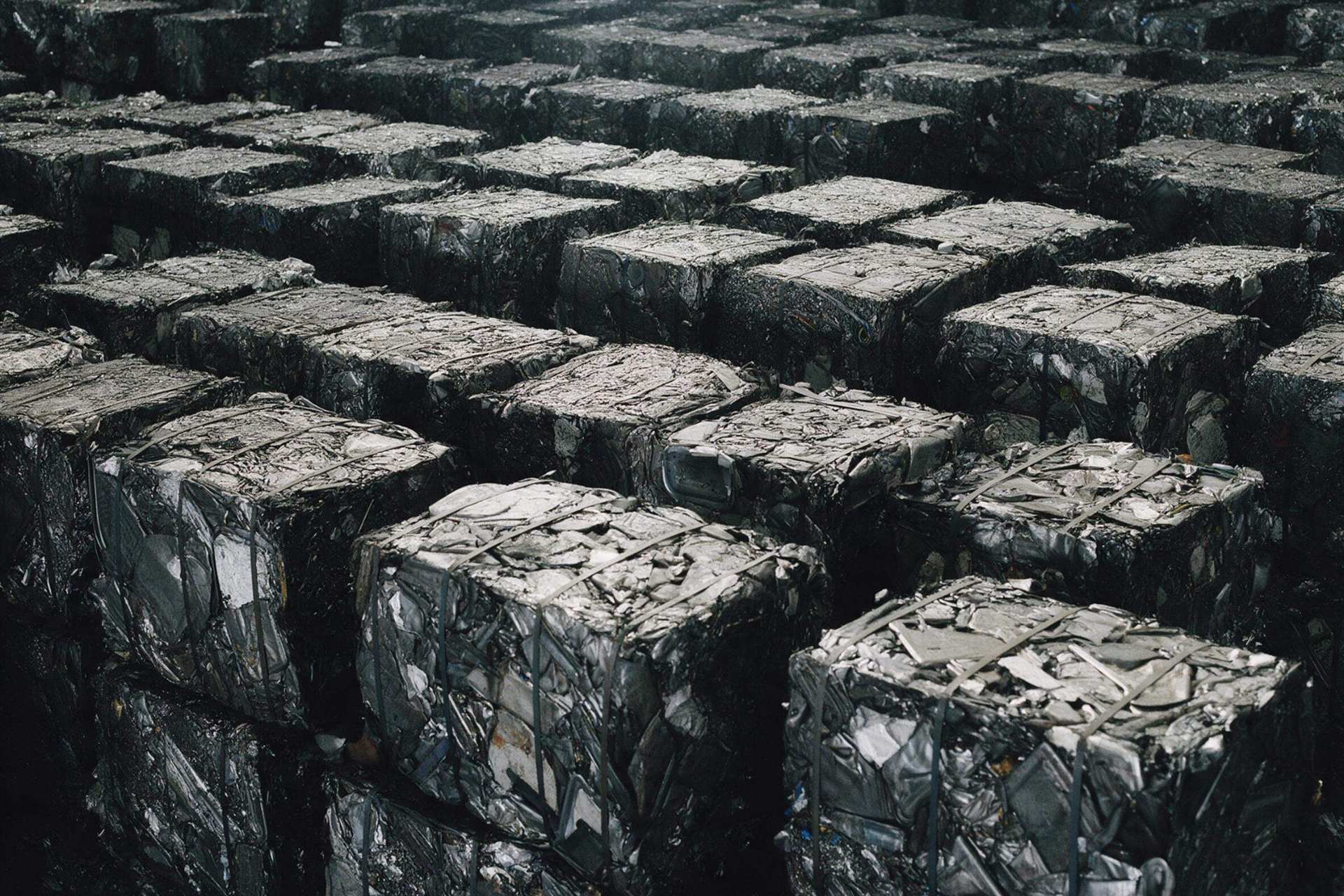
Morocco has made seawater desalination a pillar of its water strategy: from Casablanca to Agadir, from Laayoune to Dakhla, plants of all sizes turn seawater into drinking water and irrigation water. Behind these facilities lies a discreet but remarkable metal stock: kilometres of stainless piping, high-pressure pumps, motors, skids, structures and tanks. When this equipment reaches end of life or is replaced during maintenance programmes, its sorting and recovery deserve the same rigour as the water production itself.
The specific feature of a desalination plant is corrosion: seawater is aggressive, and materials were chosen to resist it. That is precisely what makes the stock valuable: a 316L stainless steel, a super duplex or a copper-nickel alloy is not ordinary steel. Poorly sorted, it joins ordinary scrap; correctly identified, it joins routes that recognise its quality. This guide reviews the metals of a plant, the equipment replacement cycles and how to organise their recovery without disrupting production.
The metals of a desalination plant
Stainless steel dominates: high-pressure piping, headers, reverse-osmosis skids, tanks and supports are very largely 316L stainless steel, chosen for its resistance to salt corrosion. It is the most characteristic — and most valuable — flow of a plant. High-pressure pumps and transfer pumps combine stainless or cast-iron bodies, shafts and wear parts in specific alloys, and electric motors wound with copper.
Copper is present in motors, supply cables and electrical cabinets, as well as in some exchangers and copper-nickel alloys in seawater circuits. Aluminium appears in casings, ducts and auxiliary equipment, while ordinary steel makes up structures, walkways, supports and building frameworks. Reverse-osmosis membranes are not metallic: they are treated separately and must not be mixed with metal loads. Our guide on metal sorting for businesses recalls the simple tests — magnet, colour, weight — that distinguish these families on site.
High-pressure pumps and membranes: maintenance and replacement
In a plant, pumps are the hardest-working equipment: they push seawater through the membranes under high pressure, in near-continuous operation. Their life cycle is paced by preventive maintenance — seals, bearings, couplings — then by full replacement, when the body or hydraulics reach their limits. Every removed pump is a metal load in its own right: body, shaft, impeller, motor and cabling are sorted separately.
Membranes, replaced in campaigns, contain no recoverable metal as such, but their housings, supports and fittings do. Good practice is to separate from the moment of removal: membranes on one side, metal parts on the other, without mixing flows. Pump motors follow the treatment described in our guide on recovering used electric motors: copper windings on one side, casings on the other.
Piping and corrosion: why stainless steel dominates
A plant's piping faces the most aggressive environment there is: seawater, high pressure, temperature variations and sometimes chemical cleaning products. That is why high-pressure circuits are 316L or super duplex stainless steel, while low-pressure circuits combine stainless steel and composite materials. When a section is replaced, the stainless grade must be identified before collection: a 316L mixed with ordinary steel loses all its specificity.
Corrosion also leaves useful traces: a pitted or pierced section cannot be judged by eye alone. A magnet, a colour test and, in case of doubt, a "to qualify" load are enough in most cases to route the part correctly. Valves, flanges and fittings follow the same rule: stainless valves on one side, brass or steel valves on the other. Water and wastewater plants share these constraints: our article on scrap metal from water and wastewater details the same metal families.
What to do with used equipment: sorting, recovery and traceability
Managing a plant's used equipment happens in three stages. First, the inventory: listing removed equipment — pumps, sections, skids, motors, structures — and their materials. Then, on-site sorting: dedicated containers per metal family, clear labelling, separation of membranes and non-metallic waste. Finally, documented collection: weighing, flow identification and full traceability, useful for the operator's environmental reporting.
This discipline pays twice: it prevents quality alloys from being downgraded to ordinary scrap, and it frees space in workshops and spare-parts stores, often cluttered with equipment removed "for now". Regular collection, timed to maintenance campaigns, keeps the site orderly and turns a dormant stock into a resource.
Work on a running site: collections without stopping production
A desalination plant produces continuously: it cannot be stopped to clear scrap. Collections are therefore organised by zone and by campaign, in coordination with the operating teams: defined access routes, sorting areas away from production circuits, loadings scheduled outside activity peaks. One-off loads — a removed pump, a replaced section — are collected as they arise, while heavier jobs — replacing a full skid, refitting a workshop — are planned as projects in their own right.
MOUMETAL works on desalination plants in Morocco with its own loading and collection resources, for a one-off load or for recurring collections. Water production and energy production share comparable stocks: see also our articles on scrap metal from dams and hydropower plants and scrap metal from thermal power plants. For a collection or an inventory on your plant, contact us: +212 660 690 806 — contact@moumetal.com.
FAQ — Scrap metal from desalination plants
Which metals are found in a desalination plant? Mainly 316L stainless steel (high-pressure piping, skids, tanks), copper (motors, cables, exchangers), steel (structures, supports), aluminium (casings, ducts) and specific alloys in pumps and wear parts.
What should be done with used high-pressure pumps? Remove them, then sort their components: stainless or cast-iron body, shaft and wear parts in alloys, electric motor wound with copper. Each part joins its route; the motor is treated like any used electric motor.
Can reverse-osmosis membranes be recycled? The membranes themselves are not metallic and are treated separately, outside metal loads. Their housings, supports and metal fittings, however, are sorted and recovered normally — hence the value of separating from the moment of removal.
How do you tell 316L stainless steel from ordinary steel? The magnet is the first test: austenitic stainless steel is not magnetic (or very slightly), unlike ordinary steel. Appearance helps too: stainless steel keeps a bright finish and does not rust. In case of doubt, isolate the part in a "to qualify" load.
Can scrap be collected without stopping the plant? Yes: collections are organised by zone and by campaign, in coordination with operations, without interrupting production. One-off loads are collected as they arise; heavy jobs are planned separately.
Have your plant's metals recovered by MOUMETAL
316L stainless steel, pumps, motors, piping and structures: MOUMETAL buys and collects metals from desalination plants in Morocco, with sorting by metal family and full traceability. To go further, read our scrap metal purchase page and our article on scrap metal from water and wastewater. Contact us: +212 660 690 806 — contact@moumetal.com.