

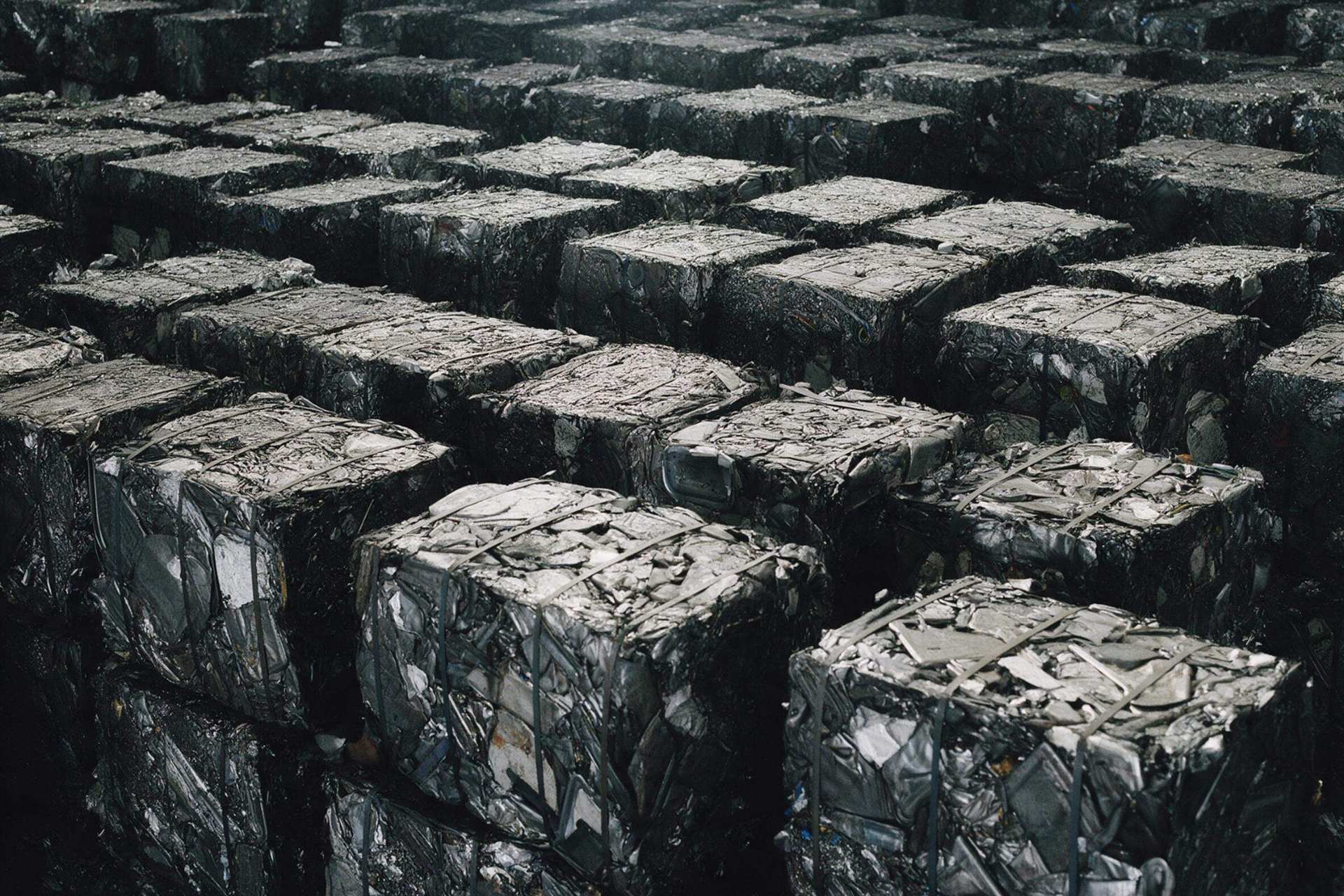
An office that is moving, a call center renewing its workstations, a company closing a floor or vacating premises at the end of a lease: metal cabinets, shelving, cables and IT equipment pile up, and nobody really knows what to do with them. In Morocco, offices and call centers have become a scrap metal source in their own right: Casablanca, Rabat and Tangier concentrate hundreds of office floors and call centers, and every move, every renovation, every IT fleet renewal releases tonnes of metal. For a company, organising this clear-out well means freeing up space, recovering value from equipment that is no longer used and vacating the premises on time. This guide explains where office scrap metal comes from, how to sort metal furniture, what happens to cables and IT equipment, and how to prepare an office clear-out before collection.
First point to understand: office scrap metal is not a uniform pile. An office floor mixes steel, aluminium, stainless steel, copper and electronic equipment, and each family is sorted and recovered separately. A successful clear-out therefore starts with an inventory, item by item: what is metal, what is electronic, what can be reused and what goes to scrap. Our article on factory clear-out describes the same method at industrial site scale; this one applies it to offices and call centers.
Where does office scrap metal come from?
The first source is metal furniture: steel cabinets and pedestals, metal shelving and racks, desks with steel frames, modular partitions with aluminium frames, chairs with metal bases, safes and lockers. Then come the cables: network cables, electrical cables, workstation power cables — all rich in copper. IT equipment is the third source: desktop units, screens, printers, photocopiers, UPS units, servers and patch panels, which are WEEE — our article on WEEE in companies in Morocco explains how to recover them.
Building installations add their share: air-conditioning units and radiators, metal light fittings, suspended ceilings with metal frames, fire doors and ironwork — our article on recovering radiators and industrial air conditioning describes this equipment. Kitchens and break rooms produce stainless steel: worktops, refrigerators out of service, dispensers. Archives, finally, release tonnes of paper and empty metal cabinets at every move. An inventory by zone — open space, meeting rooms, technical room, archives — shows the whole stock before deciding on the clear-out.
Metal office furniture: sorting steel, aluminium and stainless steel
Sorting office furniture starts with a simple gesture: the magnet test. A magnet sticks to steel — cabinets, pedestals, shelving, desk and chair frames — but not to the aluminium of modular partitions, profiles and frames, nor to the stainless steel of kitchens and some furniture. Each metal goes to its own pile: steel on one side, aluminium on the other, stainless steel apart. The wood of the tops, the melamine, the plastic of the seats and the foams are removed before weighing: a clean lot, sorted by metal, recovers better than a mixed pile.
Before declaring furniture as scrap, sort out what can be reused: a desk in good condition, a cabinet that still closes, chairs in working order have a second life on the second-hand market, and reselling them brings in more than their weight in scrap. Companies that renew their furniture in waves — one floor at a time, one department at a time — can organise regular collections rather than a single massive clear-out. Dismantling on site makes transport easier: a dismantled cabinet, unclipped partitions, dismantled shelving take up less space in the truck and sort faster. For the sorting method, read our article on sorting metals in a company.
Cables and IT equipment: copper and data
Cables are the most discreet metal in an office — and one of the most valuable: a network cable or an electrical cable is copper surrounded by a plastic sheath. Once the sheath is removed, the copper is weighed and recovered separately. Our article on recovering electrical cables details this sorting. Cables are recovered in full lengths when they are accessible: under raised floors, in trunking, behind patch panels. An office floor being emptied can produce hundreds of metres of cable.
IT equipment needs more care. A screen, a desktop unit or a photocopier does not go with the steel: it is WEEE, with its own treatment channels, batteries and components. UPS units contain lead batteries, which go to their own channel — our article on recycling used batteries in Morocco explains their treatment. The most sensitive point is data: hard drives in workstations and servers hold company data and personal data. Before any sale, drives must be wiped or destroyed, and cabinets and drawers must be emptied completely — papers, stationery and personal items do not go with the scrap metal.
Call centers: a specific source
Call centers are a case apart: hundreds of identical workstations, renewed in waves, in floors that all look alike. Each workstation is a headset, a keyboard, a screen, a desktop unit, cables — and when a center renews its fleet, hundreds of items come out at the same time. Server rooms add metal racks, UPS units, cables and patch panels — our article on scrap metal from data centers in Morocco describes this equipment at a larger scale.
Morocco has become a strong place for offshoring and call centers, with floors of several hundred seats in Casablanca, Rabat and Tangier: this sector produces a regular flow of office scrap, predictable and standardised. The furniture is standardised too — same desks, same partitions, same chairs — which makes sorting fast and regular collections possible. For a call center, the rule is to plan the fleet renewal together with the clear-out: when the new workstations arrive, the old ones leave, sorted by metal and by family, without cluttering the floors or the technical rooms.
Preparing an office clear-out: inventory, planning and end of lease
Preparing an office clear-out starts with the inventory: nature of the metals, approximate volumes, condition of the furniture, photos of the lots, address and access to the building, floor by floor. This inventory is used to organise the collection and estimate the number of trucks needed. Sorting is done while dismantling: cabinets are emptied, shelving is dismantled, cables are rolled up, IT equipment is separated from the steel. Each family is labelled, as in company sorting.
Planning is built backwards from the date the premises must be handed back: at the end of a lease, the floor must be empty on the agreed date, and removing the scrap is often the last step before handing back the keys. Coordinate with the removal company, book the lift or goods lift, plan building access times and inform security. On documents, the company must be able to justify the sale: inventory of the lot, weighing slip at collection, certificate of hard drive destruction if needed. Traceability is the same as for any scrap: every lot must be traceable from inventory to weighing, then to the foundry. For the general framework, read our article on scrap metal buyback step by step.
What happens to office scrap metal?
After collection, office scrap follows the same channel as any scrap: it goes to a sorting centre, where it is identified, separated by metal, cut and compacted, then to the foundry, where it is remelted into new raw material. Sorted steel becomes profiles or sheets, copper from cables becomes ingots or new cables, aluminium from partitions becomes alloy ingots. WEEE goes to its own channel: depollution, dismantling, recovery of metals and components. Our article on scrap metal from sorting centres and recycling facilities describes this sorting stage.
For the company, clearing out its offices is both a gain of space and a circular economy gesture: recycled metal replaces virgin ore in production, and the emptied premises can be handed back on time. MOUMETAL works throughout Morocco with companies, offices and call centers: first contact by phone or WhatsApp, site visit to inventory the lots, sorting with the department's teams, weighing and documentation of flows, collection by truck at agreed times, including evenings and weekends so as not to disturb operations. To organise an office clear-out, contact us: +212 660 690 806 — contact@moumetal.com. And to place the clear-out in the wider recycling picture, read our page scrap collection and removal and our article on metal sorting.
FAQ — Scrap metal from offices and call centers
What should be done with old metal office furniture? Reuse first: furniture in good condition — desks, cabinets, chairs — has a second life on the second-hand market. What is truly out of service is sorted by metal — steel, aluminium, stainless steel — after removing wood and plastic, then goes in a grouped collection.
Who buys a company's metal cabinets and shelving? Metal collection and recycling companies, whose trade register entry mentions scrap dealing or ferrous and non-ferrous waste processing. MOUMETAL works throughout Morocco for office clear-outs, with on-site inventory and full traceability.
How do you empty offices before a move or the end of a lease? Inventory by zone, sorting while dismantling, planning backwards from the date the premises must be handed back, coordination with the removal company and booking of the lift. Scrap leaves last, once the archives are emptied and the IT equipment is separated.
What should be done with cables and IT equipment out of service? Cables are sorted separately: they are copper. IT equipment — screens, desktop units, printers, UPS units — is WEEE and goes to its own channel. Hard drives must be wiped or destroyed before any sale, to protect the company's data.
Is hard drive data protected when equipment is sold? Yes, if wiping or destruction is organised before the sale: certified wiping or physical destruction of drives, with a certificate. Drives must never leave with the scrap lot without prior treatment, and cabinets and drawers must be emptied completely before collection.
Have your office scrap metal recovered by MOUMETAL
Metal furniture, cables, IT equipment, racks and UPS units: MOUMETAL buys and collects scrap metal from offices and call centers in Morocco, with on-site inventory, sorting by metal and full traceability. To learn more, read our page scrap metal purchase and our article on scrap metal from large retail and shops. Contact us: +212 660 690 806 — contact@moumetal.com.