
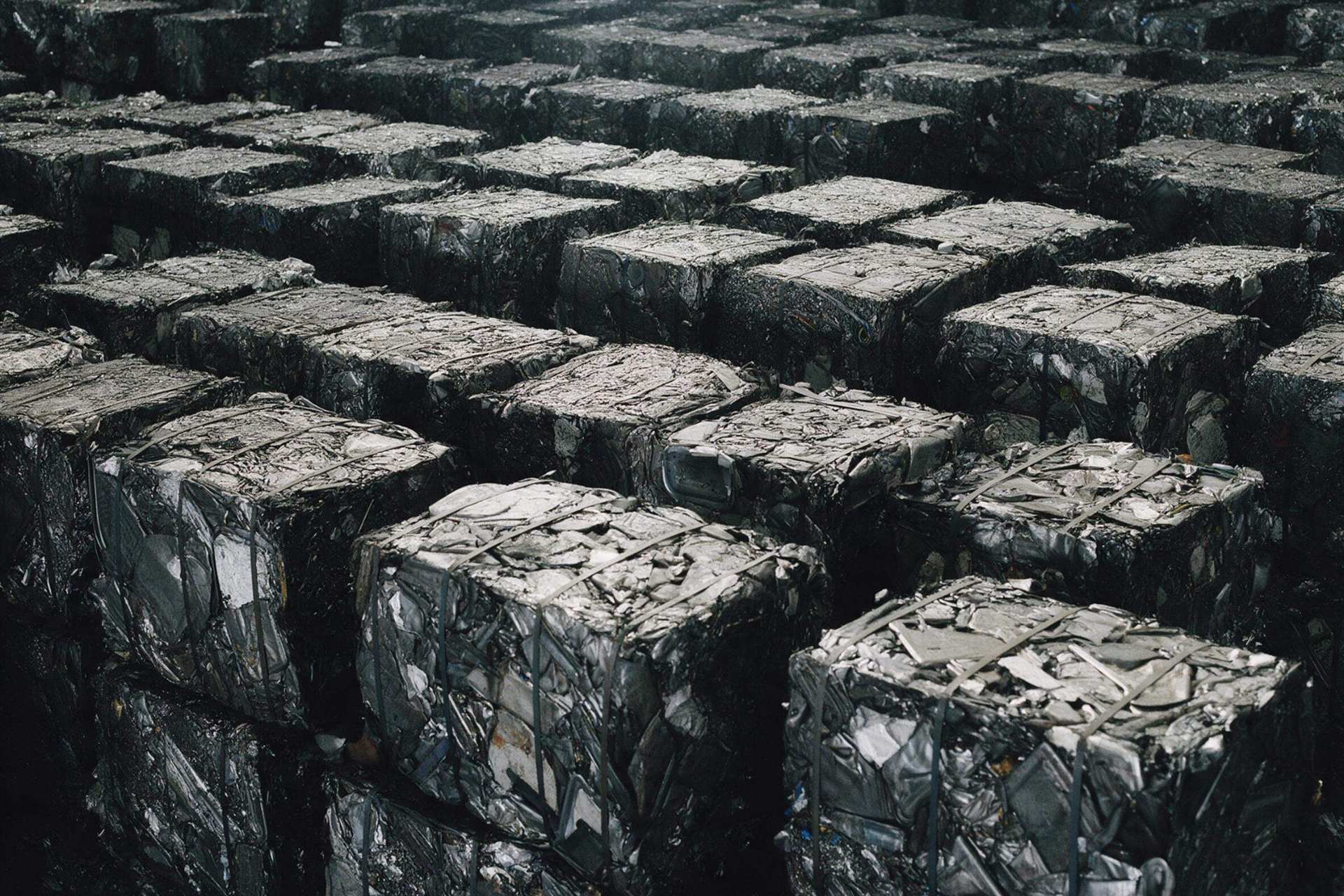
In Morocco, steelworks, foundries and metallurgy form the backbone of heavy industry: integrated steel plants and electric mini-mills, iron and steel foundries, rolling mills, boiler-making, forging and heavy machining workshops. Around Casablanca, Jorf Lasfar, Nador, Tangier and Kenitra, these sites transform considerable volumes of metal every day — and they generate just as much in the form of scrap: end-of-life equipment, wear parts, casting returns and dismantled structures. Well managed, this scrap is an industrial resource in its own right; poorly sorted, it loses most of its interest.
For plant directors, maintenance managers and production supervisors, the challenge is threefold: freeing up space without disturbing neighbouring lines, controlling specific risks — residual heat, refractory dust, very heavy lifts — and directing each part to the right route. This guide explains, in practical terms, how to approach scrap metal from steelworks, foundries and metallurgy in Morocco, from the furnace to the plant structure.
Steelworks, foundries and metallurgy in Morocco
The Moroccan landscape combines several types of plant. Large integrated steelworks, of the kind located at Jorf Lasfar or Nador, produce steel from ore or scrap, with blast furnaces or electric furnaces, converters, casting ladles and continuous casting lines. More compact mini-mills melt scrap in electric arc furnaces to feed rolling mills. Around them, foundries cast grey iron, ductile iron and cast steel for mechanical engineering, automotive, rail and construction, while metallurgy workshops — boiler-making, forging, heavy machining — shape, assemble and repair this equipment.
This diversity explains the variety of scrap produced: a steelworks generates massive, refractory-lined parts, a foundry generates moulds and casting returns, a boiler-making workshop generates heavy plate offcuts and structures. A complete inventory, workshop by workshop, remains the starting point of any successful intervention: each item of equipment must be identified, assigned to its category and located before any dismantling begins.
Furnaces, ladles, moulds and structures: where the scrap comes from
Furnaces head the list of resources: electric arc furnace shells, converter vessels, reheating furnace carcasses, ladle furnaces and heat-treatment furnaces, often lined with worn refractories. Next come casting ladles — shells, trunnions, suspension rings — and slag pots, which endure extreme thermal cycles and eventually crack or deform.
Around the melting and casting areas, further metal streams deserve the same attention: water-cooled panels and tuyeres from furnace walls, charging buckets and scrap baskets, transfer cars and ladle turrets, descaling and shot-blasting equipment, and the maintenance workshops themselves, with their lathes, boring mills, welding stations and spare-parts stocks. Each of these items must be assessed individually, because a water-cooled panel still sound can be repaired, while a cracked tuyere or a worn charging bucket belongs straight to material recovery, sorted by its alloy family.
Moulds and tooling form a second major resource: ingot moulds, foundry moulds and dies, pattern plates, moulding boxes, as well as risers, runners and gating recovered after shakeout. Rolling mills add their work and backup rolls, mill stands, roller tables and scrap shears. Finally, plant structures — steel frames, walkways, crane rails, dust-collection ducting, conveyors, continuous casting machines and tuyeres — complete the picture. As with industrial machine dismantling, dismantling follows the reverse order of assembly, assembly by assembly, with marking and photographs.
The metal families to sort on site
The first distinction separates carbon steels, which make up most structures and shells, from alloy steels — manganese steels, chromium-molybdenum steels or refractory steels — used for parts exposed to wear and heat. Cast iron, grey or ductile, forms a family of its own: machine beds, ingot moulds, cast parts and counterweights must never join steel batches.
Alongside these ferrous metals come the non-ferrous metals, less bulky but decisive for sorting quality: copper from cooling systems, cables, motors and electrical cabinets — see our guide on copper recovery in Morocco —, aluminium from covers and walkways, and stainless steels from pipework and treatment equipment. Composite assemblies — motors, gearboxes, cylinders — are handled separately, because they combine several metals. The golden rule stays simple: when in doubt, a batch « to be qualified » is better than a mixture that degrades everything else. Our metal sorting guide sets out these basic steps.
Safety: residual heat, refractory dust and heavy lifts
Steelworks and foundries demand precautions found in no other sector. Residual heat comes first: a furnace shut down hours ago, an emptied ladle or a stored ingot mould can still have burning-hot zones. Cooling must be controlled, temperature measured before any work, hot zones marked, and no hot work started without a hot-work permit issued with the site safety manager.
Refractory dust requires the same rigour: when bricks and refractory concretes are removed, fine dust must be captured at source, workers equipped with suitable respiratory protection, and areas cleaned before any cutting. Heavy lifts — shells, mill stands, whole ladles — call for dedicated lifting plans: checked overhead cranes, suitable slings, exclusion zones under the load, and never any worker under a suspended part. Residual gas risks, especially inside the confined spaces of furnaces and ladles, complete the list: ventilation, detection and energy lockout are an integral part of the works.
Depollution, refractories and traceability
Before any cutting, equipment must be depolluted: hydraulic and lubrication circuits drained, cooling circuits purged, oils and greases removed into closed, labelled containers, and non-metallic elements — seals, gaskets, cables, insulation — separated so they do not contaminate the batches. Worn refractories, bricks and concretes, are removed and stored apart: they do not follow the same route as metals and must never be loaded with them.
Traceability closes the process: each batch is identified by metal family, photographed, weighed and recorded, with its origin — furnace, ladle, rolling mill, structure — and its destination noted. For a company subject to quality audits or environmental requirements, this documentation proves that every stream followed the right route. It also speeds up later collections: a site whose batches are already qualified clears faster, without improvised sorting on the loading dock. Cement plants and building materials and the chemical and petrochemical industry apply the same traceability discipline in their own heavy environments.
Dismantling without stopping production, then reuse
In a steelworks or foundry, production often continues while a neighbouring line is dismantled. Phasing then becomes the central tool: advance inventory, marking of assemblies, removal order — peripherals first, utilities next, main equipment last — and planned shutdown windows for work requiring a shared utility to stop, such as an electrical supply or a cooling-water network. Each phase ends with the area restored: floors cleaned, access cleared, guards put back.
Not everything leaving a steelworks or foundry automatically becomes scrap: a rolling-mill roll still regrindable, a reconditionable ladle, a reusable crane rail or a working motor can find a second life, on an identical line or as a spare part. This reuse extends the life of equipment and avoids manufacturing new parts for needs that second-hand equipment can cover. The rest joins material recovery, sorted by family, and collected under the terms of our scrap collection and removal page and our scrap metal purchase offer for professionals.
FAQ — Steelworks, foundries and metallurgy scrap metal in Morocco
Can a furnace be dismantled without stopping the whole steelworks? Yes, in many cases, provided work is phased, the dismantling zone is isolated, shutdowns of shared utilities are coordinated with production, and work on shared networks only takes place during planned windows. Feasibility depends on the layout of the furnace, its connections and production constraints.
What should be done with worn refractory bricks? They must be separated from metals as soon as they are removed: refractories do not follow the same route as steel or cast iron. Bricks still intact can sometimes be reused, the others are sorted by type and directed to suitable routes, and never mixed with metal batches.
Why should cast iron not be mixed with alloy steels? Because each family follows its own remelting route, with its own composition requirements. A mixed batch loses its homogeneity and must be downgraded. Cast iron, carbon steels and alloy steels must therefore be stored and collected separately.
How is residual heat managed before cutting? Through controlled cooling, temperature measurement before any work, marking of zones still hot, and a safety delay after the furnace or ladle is shut down. No hot cutting begins until the temperature has been checked and the hot-work permit has been issued.
Can a casting ladle be reused rather than recovered as material? Yes, when its shell is sound, its trunnions in good condition and its refractory lining replaceable: the ladle can then be reconditioned for another site. Otherwise it joins material recovery, sorted by steel family, after the refractory has been fully removed.
Entrust your steelworks, foundry and metallurgy scrap to MOUMETAL
MOUMETAL supports steelworks, foundries and metallurgy workshops in Morocco with the removal, sorting and recovery of their furnaces, ladles, moulds, rolls and plant structures. To organise a site visit, phased dismantling or a collection coordinated with your production, contact MOUMETAL on +212 660 690 806 or by email at contact@moumetal.com.