

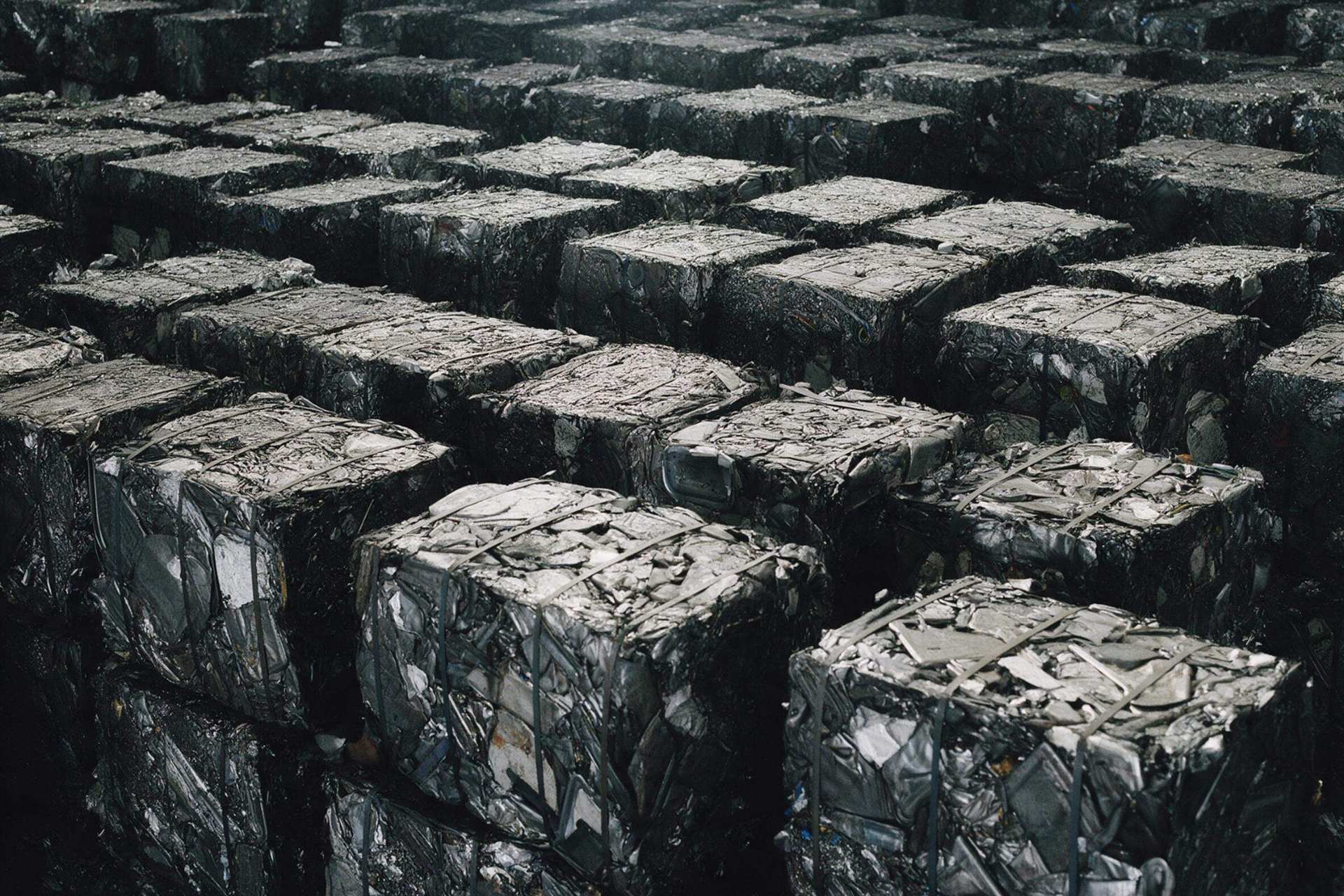
A modern slaughterhouse is first and foremost a stainless-steel factory: vats, cutting tables, overhead rails, hooks, saws, cold rooms. In Morocco, the red-meat sector — a growing market according to the Office des Changes — is modernising: municipal slaughterhouses are being renovated, cutting and processing units are becoming more professional, and ageing equipment is replaced by more efficient lines. Every renewal releases slaughterhouse scrap metal in Morocco: quality metals, above all food-grade stainless steel, that should be sorted and recovered rather than left to leave mixed.
The specific feature of this stock is hygiene: a slaughterhouse is a place under permanent sanitary control, and metal recovery only happens once equipment has been decommissioned, never on material still in contact with food. Organising sorting and collection in this setting takes method: an inventory of decommissioned equipment, clean dismantling, separation of flows and traceability. This guide details a slaughterhouse's metals, the sanitary rules to respect, and how MOUMETAL works on these sites.
Stainless steel, the slaughterhouse's king metal: vats, cutting tables, overhead rails and hooks
Slaughterhouse stainless steel recycling starts from a simple observation: in a slaughterhouse, almost everything that touches meat is stainless steel. Reception and washing vats, cutting and trimming tables, bins and trolleys, the overhead rails on which carcasses travel, hooks and pulleys, sinks and worktops: stainless steel is everywhere, because it cleans easily, resists corrosion and meets sanitary requirements. It is the most present metal by tonnage in a slaughterhouse, and also one of the best recovered — provided it is sorted cleanly, without mixing with ordinary steel.
Sorting stainless steel needs care: magnetic and non-magnetic grades must not be mixed, and parts must be stripped of their ordinary-steel fixings, joints and plastic elements. Overhead rails, often very long, are cut on site into manageable sections; hooks and small parts are grouped into homogeneous lots. Our article on buying stainless steel in Morocco details the grades and the sorting mistakes to avoid.
Cold rooms and refrigeration equipment: panels, refrigeration units and copper
There is no slaughterhouse without cold: chilling rooms, conservation cold rooms, freezing tunnels, refrigerated displays in cutting workshops. Cold room scrap metal consists of sandwich panels — lacquered steel sheet and insulating foam —, insulated doors with their metal frames, and refrigeration units: compressors, condensers, evaporators, pipework. Panel sheet is sorted separately once the insulation is removed, and the refrigeration units concentrate the valuable metals.
Copper is the hidden metal of cold: evaporator and condenser coils, refrigeration pipework, compressor supply cables. It is recovered cleanly, never by burning cables, as our article on recovering electric cables reminds. Refrigeration units also contain refrigerants and oils: their draining and depollution belong to licensed professionals before any dismantling, and MOUMETAL coordinates this step with qualified operators.
Saws, cutting machines and decommissioned slaughterhouse equipment
Decommissioned slaughterhouse equipment forms the third stock: band saws for cutting carcasses, circular saws, mincers, slicers, mixers and packaging machines, conveyors, scales and weighbridges, pallet trucks and forklifts. These machines combine steel, stainless steel, aluminium casings, copper from electric motors and sometimes brass fittings.
The rule for these machines is to dismantle rather than smash: an electric motor is separated from its casing, saw blades are grouped separately, aluminium casings are sorted apart. Machines still working can sometimes be resold second-hand by their owner; those beyond use join metal sorting. It is the same logic as any industrial machine dismantling: inventory first, dismantle second.
Hygiene and sanitary standards: what recovery never touches
A Moroccan slaughterhouse operates under the control of ONSSA, the National Office for the Sanitary Safety of Food Products, which sets the hygiene rules for premises and equipment in contact with food. Metal recovery fits strictly after decommissioning: no equipment still used for meat — vat, table, rail, hook — is dismantled or recovered while it takes part in production.
In practice, that means three things: equipment to be recovered is first decommissioned and isolated from the production area; dismantling and collection happen outside slaughtering and cutting hours, without interfering with the cold chain or hygiene circuits; and sorting areas are set up away from production premises. A slaughterhouse that organises the exit of its metals this way protects both its sanitary compliance and the value of its lots, because soiled or mixed stainless steel loses value.
Sorting a slaughterhouse's metals: stainless steel, steel, copper, aluminium
Slaughterhouse metal recovery rests on rigorous sorting, from the moment of dismantling. Stainless steel — vats, tables, rails, hooks — is the main flow and is sorted by grade. Ordinary steel — structures, gates, racking, machine frames — forms the basic ferrous flow. Copper — refrigeration coils, cables, motors — and aluminium — casings, doors, frames — are separated apart, as they are the most valuable non-ferrous metals. Brass from fittings and taps joins the other non-ferrous metals.
The costliest mistake is mixing: a stainless steel lot contaminated with ordinary steel is downgraded, and a copper lot mixed with other metals loses value. Hence the importance of a dedicated sorting area, bins identified by metal family, and a prior inventory. Waste traceability obligations apply to slaughterhouses too: our article on the legal obligations for metal waste recalls the framework to respect.
The MOUMETAL process: from the call to on-site collection
MOUMETAL works on slaughterhouses and meat processing units across Morocco with a simple process: a call to +212 660 690 806 or a message describing the equipment to sell, then an on-site visit to inventory the lots — stainless steel, cold rooms, machines, structures — and agree collection arrangements. Sorting is done on site, by metal family, with weighing and documentation of flows for each lot.
Collection is scheduled outside production hours, with loading equipment suited to long parts such as overhead rails and to the bulk of cold-room panels. Flows leave documented, with full traceability, feeding directly into the establishment's reports. As with the whole food industry — see our article on scrap metal from dairies in Morocco — the goal is the same: clear the site cleanly, without interrupting activity, and recover every metal through its proper channel. The steps in detail are described in our article on the scrap metal purchase process.
FAQ — Scrap metal from slaughterhouses and the meat industry
Who buys scrap metal from a slaughterhouse? Metal collectors and recyclers such as MOUMETAL: a call, an inventory visit, sorting by metal family, weighing and on-site collection, with traceability of flows. Slaughterhouses, cutting units and processing workshops can sell their decommissioned equipment, stainless steel and cold rooms first.
What should be done with a slaughterhouse's stainless steel vats? Once decommissioned and isolated from the production area, stainless steel vats are dismantled, stripped of their fixings and joints, then sorted by stainless grade to join recycling. Vats still in good condition can also be reused in another unit, after cleaning and inspection.
How are used refrigeration units recovered? By separating flows: sheet from cold-room panels, copper from coils and pipework, steel from structures, without ever burning cables. Refrigerants and oils must be drained by licensed professionals before refrigeration units are dismantled.
Must a slaughterhouse sort its metals? Yes: sorting at source — stainless steel, steel, copper and aluminium kept apart — preserves the value of each flow and avoids downgrading lots. It also fits within waste traceability obligations, and it makes collection easier without disrupting production.
How does on-site collection work? After a call and an inventory visit, MOUMETAL schedules collection outside production hours: on-site sorting by metal family, weighing, loading with equipment suited to long and bulky parts, and full documentation of outgoing flows.
Have your slaughterhouse's metals recovered by MOUMETAL
Stainless steel vats, overhead rails, cold rooms, saws and cutting machines: MOUMETAL buys and collects metals from slaughterhouses and the meat industry in Morocco, with on-site sorting and full traceability. To go further, read our scrap metal purchase page and our article on the scrap metal purchase process. Contact us: +212 660 690 806 — contact@moumetal.com.