

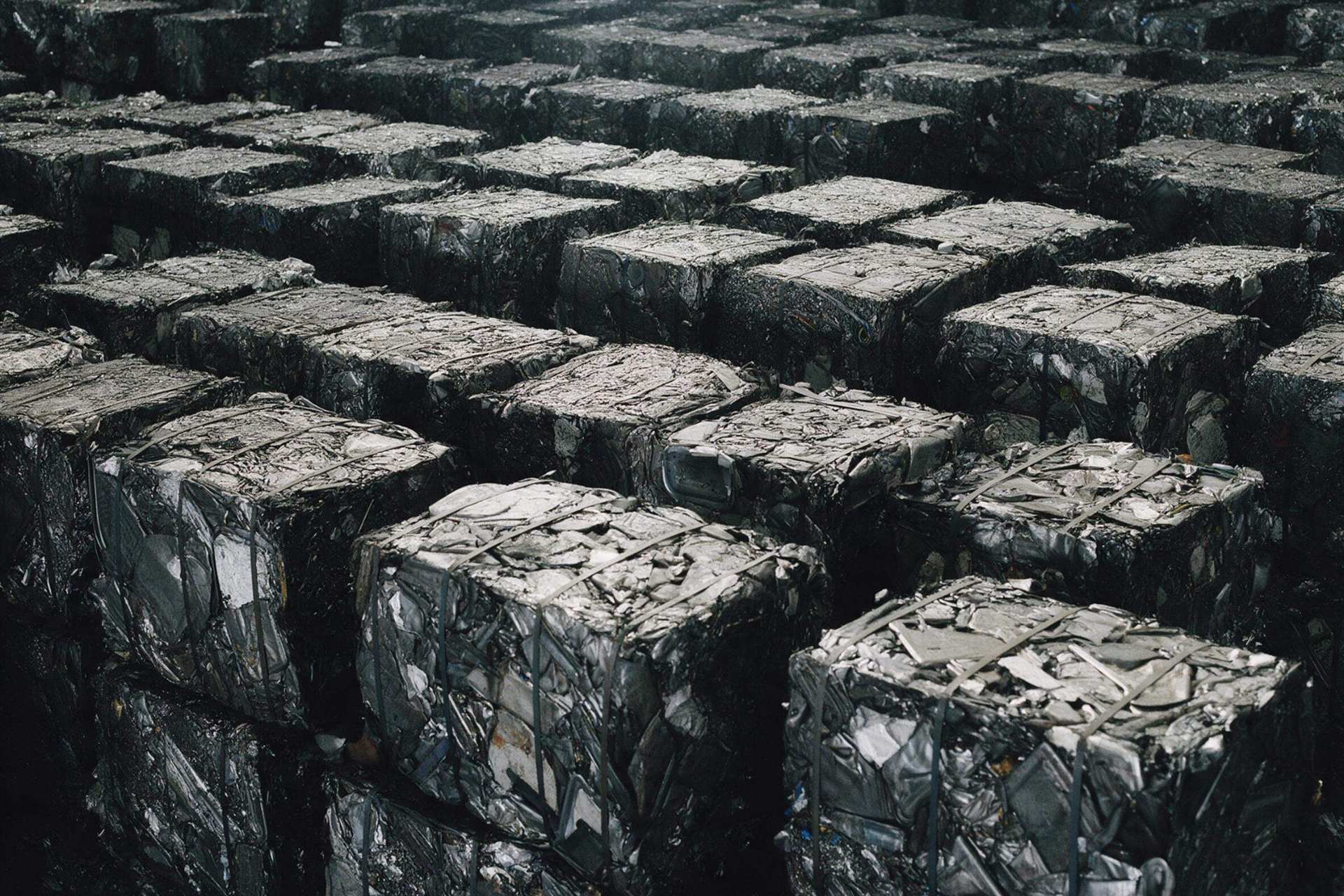
In a boilermaking, locksmith or metal joinery workshop, scrap metal does not come from a building site or a demolition: it is born every day, with every cut. A cut sheet leaves an offcut, a sawn profile leaves a short length, a bent tube leaves an end piece. Taken one by one, these offcuts seem negligible; accumulated week after week, they fill whole skips and tie up space, time and value. Yet in many Moroccan workshops they still end up in a corner of the yard, mixed and rusting, waiting for a clear-out that never comes. This guide explains how a workshop can turn its steel offcuts and sheet metal into a regular, recovered flow, and how MOUMETAL organises scrap metal purchase for locksmiths and boilermakers in Morocco.
The particular feature of workshop scrap is its regularity: it does not arrive all at once, it flows. A workshop that cuts every day produces offcuts every day — and the best organisation is not the big annual clean-up, but sorting as you go and planned collections. This guide details the types of offcuts, the sorting rules, workshop organisation and the collection process, so that scrap from a metalwork workshop becomes a clean routine rather than a problem that piles up.
Cutting, punching and bending offcuts: where workshop scrap comes from
Boilermaking steel offcuts are born at every operation. Cutting — plasma, laser or shear — leaves irregular sheet offcuts, strips and corners. Punching produces slugs and trimmings. Bending leaves ends of profiles, tubes and angles. Sawing bars leaves short lengths, often too short to reuse. Added to that are failed parts, prototypes, worn jigs and welding leftovers: rods, wire and slag.
The nature of the offcuts depends on the trade. A boilermaker works mainly with steel and heavy sheet, for tanks, reservoirs, hoppers and structures. A locksmith cuts profiles, tubes and thin sheet for doors, grilles, guard rails and stairs. A metal joiner assembles aluminium and steel frames for windows, facades and verandas. Each trade therefore produces its own mixture — and it is that mixture that must be learned to sort, because a sorted offcut is always worth more than a mixed one. Workshops that machine parts will find the same logic in our article on metal machining offcuts.
Sorting boilermaking offcuts: steel, stainless steel, aluminium and brass
Sorting starts by separating the big families. Ordinary steel — black sheet, profiles, tubes — forms the bulk of the volume: it is recognised by the magnet and by surface rust. Stainless steel, found in food tanks, worktops and sanitary equipment, does not stick to the magnet in the same way and does not rust: it must stay apart. Aluminium, light and bright, comes from frames, cladding and metal joinery profiles. Brass and copper, rarer, are found in taps, fittings and cable offcuts: they are the metals to isolate with the most care, because they concentrate the value of the load.
Recovering sheet offcuts depends directly on this sorting. Clean steel sheets, stacked and without thick paint, go straight to steel recycling. Stainless offcuts mixed with ordinary steel lose their specificity and are downgraded. Aluminium profiles soiled with ferrous scrap or steel screws need reprocessing. The rule is simple: one bin per metal, clean offcuts, and never any non-metallic waste — wood, plastic, rags — in the metal bins. Our guide on sorting metals in a company details the gestures and the mistakes to avoid, bin by bin.
Keeping the workshop tidy: bins, skips and sorting habits
A workshop that sorts well is a workshop that works better. Sorting does not need a big investment: a few labelled bins near each workstation — steel, stainless, aluminium, copper and brass — are enough for every operator to throw each offcut in the right place, the moment it falls. Long offcuts, such as lengths of profiles and tubes, are stored upright in a rack rather than on the floor: they stay visible, accessible, and some can even be reused on a small part.
The skip goes outside, under cover if possible, on a clean slab: offcuts left in mud or under rain rust, get dirty and are downgraded. A dedicated, marked area stops the skip becoming the dumping ground for the whole workshop — broken pallets, cardboard, site waste. The workshop manager benefits from setting a simple routine: bins emptied into the skip at the end of every week, the skip reported as soon as it is full, and a named person in charge of sorting. It is this daily discipline that makes the difference between a cluttered workshop and one that sells its scrap regularly.
Small regular collections or a big clear-out: which organisation?
Two rhythms exist, and they complement each other. Regular steel offcut collection — every few weeks, as soon as the skip is full — suits workshops that cut continuously: it frees space, avoids accumulation and turns scrap into a regular extra income. The big clear-out is scheduled once or twice a year: cleaning the yard, removing old stocks, obsolete parts and offcuts forgotten under benches.
The choice depends on volume and available space. A small locksmith workshop in an urban area, with no yard, benefits from frequent small-volume collections: scrap must never block the working area or the exit. A larger boilermaking workshop, with a yard, can let a bigger skip fill up and schedule a monthly collection. In both cases, the essential thing is not to wait until the workshop is saturated: a skip that has been full for weeks is lost space and offcuts that degrade. MOUMETAL adapts its rounds to each workshop's pace, for a one-off load as well as for regular collections.
Used machines and equipment: presses, shears and welding sets
Beyond offcuts, a workshop accumulates machines and equipment at the end of their life: tired press brakes, replaced guillotine shears, broken punch presses, old welding sets, compressors, generators and motors. This equipment contains structural steel, electric motors, copper cables and sometimes electrical cabinets: it is recovered as scrap and as equipment, provided it is inventoried before removal.
The rule here, as for offcuts, is to throw nothing away without an inventory. A welding set out of service contains cables and components; an old shear, blades and rams; a compressor, a motor and a tank. Cables must never be burned to recover copper: our article on recovering electric cables explains why. For heavy equipment, dismantling on site — cutting structures, separating motors — is prepared with the collector. MOUMETAL also handles industrial machine dismantling, with sorting and traceability of flows.
The MOUMETAL process: call, visit, on-site sorting, weighing, collection, traceability
Buying scrap from a locksmith in Morocco follows a simple process, designed for workshops. Everything starts with a call or a WhatsApp message: the locksmith or boilermaker describes the offcuts — types of metal, approximate volumes, city — and sends a few photos of the skip or the yard if possible. MOUMETAL then proposes a site visit to see the loads, confirm the sorting and organise collection: truck access, skip location, times that do not block production.
On site, the teams sort with the workshop if needed, separate the metal families and load the batches. Weighing is done transparently, batch by batch, and every collection is documented: types of metal, quantities, destination of the flows. The workshop keeps a written record of its outgoing loads — useful for its own reporting and to prove that its metal waste really goes to recycling. To prepare for the visit, our article on the scrap purchase process, step by step details each phase, from the call to the collection. And to understand where each metal goes, read our guide on metal recycling in Morocco. For a collection or a visit to your workshop, contact us: +212 660 690 806 — contact@moumetal.com.
FAQ — Scrap metal from boilermaking, locksmith and metal joinery workshops
What should be done with sheet metal offcuts? Sort them by metal — steel, stainless, aluminium — into separate bins, keep them clean and dry, then have them collected by a metal collector as soon as the volume justifies it: they join recycling instead of piling up in the yard.
Who buys a workshop's steel offcuts? Metal collectors and recyclers such as MOUMETAL: a call or message with photos of the loads, a site visit, sorting, weighing and collection, with regular rounds adapted to the workshop's production pace.
How should boilermaking offcuts be sorted? One bin per metal — ordinary steel, stainless, aluminium, copper and brass — placed near each cutting station, clean offcuts with no non-metallic waste, and long lengths stored apart for possible reuse.
Can a locksmith sell his scrap metal? Yes: a locksmith regularly produces offcuts of profiles, tubes and sheet, as well as used parts and equipment, and can have them bought by a metal collector, through regular collections or a one-off clear-out.
How does offcut collection work? After a first contact and a visit, the loads are sorted on site, weighed batch by batch, loaded and collected by the collector, with documentation of the flows — types of metal and quantities — handed to the workshop.
Have your workshop's offcuts recovered by MOUMETAL
Steel offcuts, sheet metal, profiles, tubes and used machines: MOUMETAL buys and collects scrap from boilermaking, locksmith and metal joinery workshops in Morocco, with on-site sorting and full traceability. To go further, read our scrap metal purchase page and our article on metal machining offcuts. Contact us: +212 660 690 806 — contact@moumetal.com.